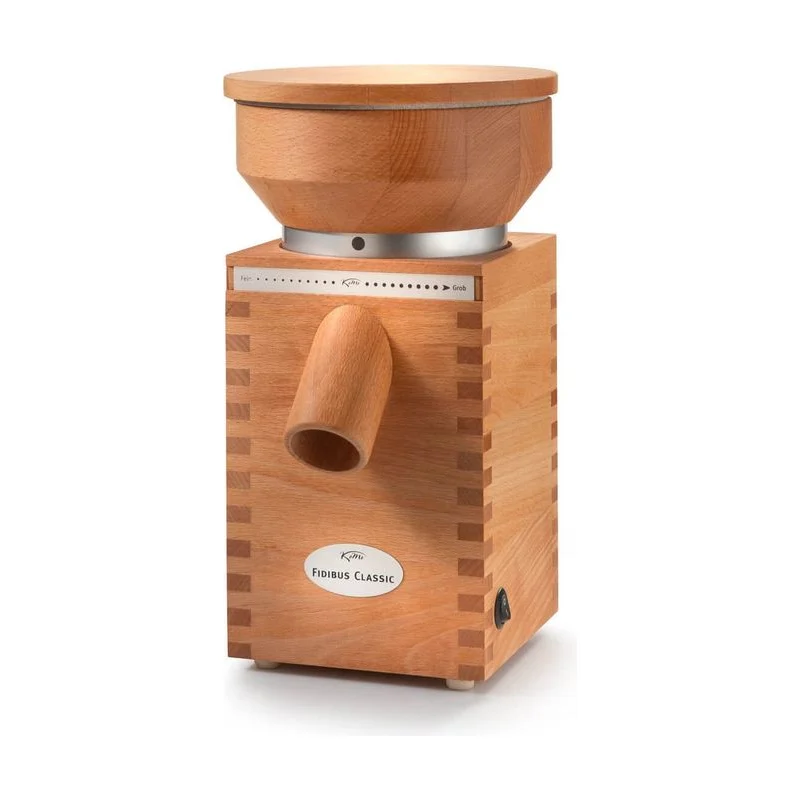
The KoMo Fidibus Classic housing: solid beech and mortise and tenon joints
The housing is solid beech wood, treated with high-quality plant oils — KoMo’s exact specification row for housing material. A second row in the same table describes high-quality wooden mortise and tenon joints for maximum stability. Mortise and tenon is a joint in which a projecting tongue seats into a matching cavity cut in the mating piece, and KoMo’s stated reason for specifying it here is stability. The specification table names no lacquer, varnish or sealed finish; the surface treatment KoMo publishes is plant oil. KoMo does not state whether that oiled surface needs re-treating, or at what interval.
Under its advantages list, KoMo states solid local beech wood from sustainable forestry, oiled with natural plant oils. That sentence is manufacturer marketing copy rather than a certification. The certification appears only on the importer’s side: Pleasant Hill Grain’s specification tab lists PEFC under certifications, and its page body describes a KoMo partnership with PEFC. KoMo’s own product page for the Fidibus Classic does not state PEFC, and the dealer tab does not state which component of the mill the certification covers.
Pleasant Hill Grain publishes a base footprint of 8.5 by 7.8 inches, and an overall size of 7.8 by 8.5 by 13.43 inches including the spout. KoMo publishes 33 × 16 × 21.3 cm for height, width and depth. Those two descriptions agree on height and depth to within half an inch and disagree on width by about an inch and a half. Published weight is harder still to pin down, with three figures across two pages; both disputes are itemized in the conflicts section below. How this beech cabinet reads against the other well-known stone burr mill in the same class is worked through at Mockmill 100 vs KoMo Fidibus Classic.
| Cabinet attribute | Published value | Read from |
|---|---|---|
| Housing material | Solid beech wood, treated with high-quality plant oils | komo.bio product page |
| Joinery | High-quality wooden mortise and tenon joints for maximum stability | komo.bio product page |
| Size (H x W x D), manufacturer | 33 x 16 x 21.3 cm | komo.bio product page |
| Dimensions (W x D x H), dealer in-page table | 7.8 x 8.5 x 13.43 inches, including spout | pleasanthillgrain.com product page |
| Base dimensions (L x W), dealer specifications tab | 8.5 x 7.8 inches | pleasanthillgrain.com product page |
| Weight, manufacturer | 8 kg | komo.bio product page |
| Weight, dealer specifications tab | 16.5 lbs | pleasanthillgrain.com product page |
| Weight, dealer in-page table | 15 lbs 4 oz | pleasanthillgrain.com product page |
| Certifications | PEFC | pleasanthillgrain.com product page |
| Re-oiling interval for the plant-oiled surface | No interval is stated | Not stated in any document read for this page. |
Three weights are published across two pages and no source states whether any of them is a shipping weight rather than a net weight. The two width figures, 16 cm and 7.8 inches, differ by about an inch and a half, while height and depth agree to within half an inch.

85 mm corundum ceramic stones, and what KoMo does not state about them
What this section establishes
- Three diameter figures are published for one pair of stones: KoMo’s 85 mm, Pleasant Hill Grain’s in-page 3.35 inches, and the same dealer’s specifications tab at 3.3 inches. KoMo and the dealer’s in-page figure agree to within a tenth of a millimeter, so the inconsistency is internal to the dealer’s page rather than between the two companies.
- The only fineness figure anyone publishes is KoMo’s own, and it arrives pre-hedged: finer than 0.3 mm, depending on the measuring method, up to 90% below this size. Neither that measuring method nor an independent particle-size distribution appears on any source read for this page.
- Nothing in either company’s documentation bounds the life of the stones. Self-sharpening is asserted twice on KoMo’s product page and never qualified with a service life, a replacement interval, or a condition under which the behavior would stop holding.
The Fidibus Classic mills with stones — a pair of burr surfaces that shear grain between them — rather than by impact, the mechanism in which a chamber of spinning fins shatters grain against stationary teeth. KoMo’s specification row for the grinder reads: infinitely adjustable, self-sharpening, made of premium corundum ceramic. Pleasant Hill Grain’s specification tab records the burr material as ceramic-corundum. What the mechanism choice governs — above all which materials a mill permits and excludes — is set out at Impact vs stone burr grain mills.
KoMo states a millstone diameter of Ø 85 mm. Pleasant Hill Grain’s in-page table gives 3.35 inches for the diameter of the corundum-ceramic mill stones, which converts to 85.1 mm and agrees. The same dealer’s specification tab gives 3.3 inches instead. That is a rounding difference inside one page rather than a disagreement between two companies, but both numbers are published and both are recorded here.
Grind fineness is published as a manufacturer claim carrying its own hedge: finer than 0.3 mm, depending on the measuring method, up to 90% below this size. The wording is KoMo’s and the hedge belongs to it. The figure is conditional on a measuring method the page does not name, and no particle-size distribution from an independent laboratory appears on any source read for this page.
Self-sharpening is likewise a manufacturer statement rather than a measured property. It appears twice on the product page: once in the grinder specification row, and once in the description sentence stating that the mill has a powerful 360-watt industrial motor and self-sharpening, high-quality corundum-ceramic grinding stones. Neither KoMo nor the importer states a service life for the stones, a replacement interval, or the conditions under which the self-sharpening behavior would stop holding.
The KoMo Fidibus Classic motor: 360 watts, and two throughput figures that disagree
What this section establishes
- Both companies publish the same 360 watts. The only difference is Pleasant Hill Grain’s parenthetical 360W (1/2 HP); the horsepower equivalence appears nowhere in KoMo’s own documentation.
- Throughput is the motor figure that splits: KoMo’s milling capacity for wheat of 100 g/min against the importer’s 8-9 oz/min for bread flour texture, roughly 227 to 255 g/min, at a fineness setting neither source states.
- The only US-market electrical figures published are the importer’s — electric (AC), std. 120V, 60 hertz, with a 47-inch cord — against KoMo’s cable length of 1.5 m. No source states whether the cord difference follows from the market variant.
- No RPM figure, no insulation class and no continuous-duty rating appears on any source read for this page, so the published record of this motor is its wattage and two throughput figures that disagree.
The mill draws 360 watts. KoMo’s specification table gives performance as 360 watts. Pleasant Hill Grain’s in-page table gives the industrial motor electric rating as 360W (1/2 HP), and its specification tab separately shows watts 360. The horsepower equivalence is the importer’s addition, not KoMo’s. KoMo’s description sentence states a powerful 360-watt industrial motor, which is an assertion about the class of the motor rather than a published specification: no RPM figure, no insulation class and no continuous-duty rating appears on any source read here.
Throughput is published twice and the two figures do not agree. KoMo states a milling capacity for wheat of 100 g/min. Pleasant Hill Grain states a milling rate for bread flour texture of 8-9 oz/min, which is roughly 227 to 255 grams a minute, between two and two and a half times the manufacturer’s figure. The importer at least names the texture at which its figure was taken; KoMo names none. Neither states the fineness setting, the grain moisture or the wheat class behind its number, so the two are not comparable and are not averaged here.
Electrical supply differs between markets and the documentation shows it. KoMo’s options row states 110V motor & gluten-free ground available; the second half of that row is the page’s own machine translation from German and its meaning is not recoverable from the English page. Pleasant Hill Grain describes the US unit concretely: power source electric (AC), cord-end plug std. 120V, 60 hertz. Cord length is a third figure the two sources dispute, with KoMo publishing a cable length of 1.5 m, about 59 inches, against the importer’s 47 inches.
The KoMo Fidibus Classic's stepless grind setting, and the manual's hopper-turning procedure
Texture adjusts by rotating the hopper that sits on top of the mill. KoMo’s specification row calls the grinder infinitely adjustable, and an advantages bullet calls it a stepless grind setting with tool-free opening. The KoMo owner manual gives the operating step plainly: adjust the desired fineness by turning the hopper. That manual is written for KoMo’s mills and flakers as a family and never names the Fidibus Classic, so its procedures are attributable to KoMo’s electric mill line rather than to this model alone.
Direction is documented in the disassembly instructions rather than the operating ones. Turning the hopper counter-clockwise moves toward coarse, and turning it far enough counter-clockwise releases the hopper altogether, which is how the mill opens for cleaning. Pleasant Hill Grain’s instruction for cracking dent corn confirms that the mill carries printed reference marks: it tells the owner to turn the hopper counterclockwise one half hopper turn past the coarsest indicated setting on the front of the mill.
The manual publishes a calibration procedure for finding the finest usable setting. Run the mill empty, turn the hopper toward fine until the millstones can be heard grinding on one another, then turn back a little toward coarse until the grinding noise stops. That point is the finest setting. The procedure is KoMo’s own, and it is performed without grain in the hopper precisely because the stones make contact at the extreme of travel.
Readjustment does not require stopping the mill. Step six of the electric-mill operating sequence states that the fineness may be readjusted by turning the hopper either while the grinder is empty or while grinding. The same manual gives the opposite instruction elsewhere — the hand mill and the flakers are to be empty before their settings change — so the permission to adjust under load is specific to the electric mills, and the Fidibus Classic is an electric mill.
The fineness procedure, assembled from the KoMo owner manual’s operating steps, its tip box and its disassembly chapter
- Set the fineness by turning the hopperStep 4 of the manual’s operating sequence for the electric mill reads: adjust the desired fineness by turning the hopper. Turning counter-clockwise moves toward Coarse.
- Calibrate the finest setting with the mill empty and runningThe manual’s tip is to turn the hopper toward Fine, without grist, while the mill runs, until the millstones can be heard grinding on one another.
- Back off toward Coarse until the noise stopsThe manual calls the point at which the grinding noise stops the finest setting. The calibration is done without grain precisely because the stones make contact at the extreme of travel.
- Readjust during a run if the texture needs changingStep 6 states the fineness may be readjusted by turning the hopper either while the grinder is empty or while grinding. The manual gives the opposite instruction for the hand mill and the flakers, so this permission belongs to the electric mills.
- Turn counter-clockwise past Coarse to remove the hopperThe disassembly instruction is to turn the hopper toward Coarse, counter-clockwise, until it can be removed, which is how the grinding chamber opens for cleaning.
Hopper capacity, and the catch bowl that is not in the box
What this section establishes
- The hopper holds approx. 1,000 g of wheat per KoMo’s funnel fill quantity row; Pleasant Hill Grain publishes 2 lb 1 oz for the same measurement and states its condition, level with the lid on.
- No flour container ships with the mill. KoMo’s scope of delivery row reads, in full, mill with lid, so there is no container capacity figure to publish for this model.
- Clearance under the spout is published as 12.3 cm by KoMo and as a maximum bowl height of 5.5 inches by the importer; a container chosen against the smaller figure fits either way.
The hopper holds approximately 1,000 g of wheat, per KoMo’s funnel fill quantity row. Pleasant Hill Grain publishes 2 lb 1 oz for the same measurement and states the condition under which it was taken: level, lid on. That works out to about 936 g, close to KoMo’s figure without matching it, and only the importer says how the hopper was filled. Both figures are quoted for wheat; neither source publishes a fill figure for a denser or bulkier grain, so a reader loading corn or lentils is working without a published number.
No flour container is supplied. KoMo’s scope of delivery row reads, in full, mill with lid. Below the specification table the page adds an explicit note that the bowl shown in the product photography is not included in the delivery. There is therefore no flour container capacity to publish for this mill, which is why that row carries an absence rather than a number in the specification table above, and why any comparison against a mill sold with a bowl is a comparison of two different scopes of supply.
The scope-of-delivery statement is KoMo’s European listing. It governs what KoMo ships, not what a US seller chooses to bundle, and the importer page read for this analysis does not state its own kit contents. A buyer in the United States should confirm the box contents with the seller rather than assume either answer, and should budget for a container of the right height if none is included.
Clearance beneath the outlet is published on both sides and the two figures do not match. KoMo’s row, awkwardly translated from German, reads height below the bowl’s height: 12.3 cm — the page never uses the words clearance or outlet. Pleasant Hill Grain publishes a maximum height of bowl at spout of 5.5 inches, which is 14.0 cm. The practical question behind both numbers is identical, namely how tall a container fits under the spout, and the answer differs by about 1.7 cm depending on which page is read. A container chosen against the smaller figure fits either way.
Note: The bowl shown is not included in the delivery.
What the Fidibus Classic permits, and what it excludes
What this section establishes
- KoMo’s device overview chart marks the Fidibus Classic permitted for soft grain, hard grain, spices, legumes and coffee, and excluded for oilseeds.
- Pleasant Hill Grain’s 360/600W column, which names the Classic among its models, marks 17 materials yes, 6 with conditions attached, and 7 no.
- The importer states that its own list, not KoMo’s, is the one carrying warranty backing for US customers, which reverses the usual hierarchy between a manufacturer and a dealer.
- Pleasant Hill Grain also states that its lists are not exhaustive, so absence of an ingredient from all three documents is not permission.
Three separate documents govern what may enter this mill, and they do not cover the same ground. KoMo’s device overview chart marks the Fidibus Classic across six material columns. KoMo’s product page names a shorter set in prose, and KoMo’s owner manual names a third set. Pleasant Hill Grain, which describes itself as the exclusive US importer of Austrian-made KoMo mills, publishes a per-ingredient grinding list whose 360/600W column names the Classic explicitly among its models. The lists below are reported source by source rather than merged, because merging them would conceal exactly the disagreements a buyer needs to see.
Pleasant Hill Grain states that its lists are not exhaustive, so absence from all three documents is not permission. The importer also states which list wins where the two sides disagree for a US owner: its claims of what each mill can and cannot grind are the only relevant claims with respect to the warranty on all US customers’ mills, and claims made on its website will be backed with full warranty service for US customers, including those that do not match what KoMo states in its manual or on its website. For a US buyer that reverses the usual hierarchy — the importer’s list, not the manufacturer’s, is the one carrying warranty backing.
- KoMo device chart, Fidibus Classic row: soft grain (Weichgetreide) permitted; hard grain (Hartgetreide) permitted; oilseeds (Ölsaaten) excluded; spices (Gewürze) permitted; legumes (Hülsenfrüchte) permitted; coffee (Kaffee) permitted.
- KoMo general rule: anything that is not oily or fatty and not moist is suitable for grinding; nuts and oily seeds such as flaxseed, oats or poppy seeds do not belong in a grain mill, and damp grain could clog the grinding stones.
- KoMo product page prose: the mill grinds soft and hard grains, corn, legumes, or coffee beans. Corn appears here unqualified, though the device chart has no corn column and the importer splits corn into two different answers.
- KoMo owner manual, what materials can be ground: wheat, oat, spelt, buckwheat, rice, barley, millet, unripe spelt grain, corn, coffee, and spices such as caraway seeds, pepper, coriander, anise or fennel.
- Importer list, marked yes for 360/600W mills including the Classic: barley; buckwheat; dried beans; dried non-oily spices; einkorn; khorasan; lentils; millet; quinoa; rice; rye; sorghum; soybeans; spelt; teff; triticale; wheat.
- Importer list, marked caution with conditions attached: amaranth; coffee beans, roasted only and avoiding oily or dark roasts; dent corn, which must be cracked on a coarse first pass; garbanzo beans or chickpeas, dry only, maximum 10 oz per batch, letting the motor cool; kernza; dehulled oats, in small quantities, cleaning the stones afterward with rice.
- Importer list, marked no for 360/600W mills: cacao nibs; cinnamon sticks; Indian (flint) corn; flaxseed; popcorn; sesame seeds; sugar.
- Owner-manual prohibitions that are not ingredient-specific: unpurified raw food, which often contains small stones that might damage the device; and re-milling flour that has already been ground once, because the millstones would smear.
Oats: three documents, three answers
Oats are the clearest case of these sources contradicting each other, and the contradiction runs inside KoMo as well as between KoMo and its importer. KoMo’s material overview names oats among the oily seeds — alongside flaxseed and poppy seeds — that do not belong in a grain mill, and directs them to the flaker and the mixer instead. KoMo’s own owner manual, under the heading asking what materials can be ground, lists oat second, immediately after wheat. Pleasant Hill Grain takes a third position: dehulled oats sit on the caution list for 360/600W mills, permitted in small quantities with the stones cleaned afterward using rice.
No source reconciles the three positions. An explanation suggests itself — that whole oats behave differently from dehulled oats put through in small batches — but no document states it, so it is offered here as reasoning and not as a published fact. What a US owner can act on is the warranty position rather than the milling theory: the importer’s caution entry, conditions included, is the claim that carries warranty backing for US customers. That entry is a conditional permission, not a clearance, and the condition about cleaning the stones with rice afterward is as much a part of it as the permission itself.
The same three-way pattern is worth carrying into any other ambiguous ingredient. Corn is permitted without qualification in KoMo’s product-page prose, absent as a column from KoMo’s device chart, and split by the importer into dent corn with a mandatory coarse first pass and flint corn refused outright. Where the sources disagree, the safe reading is the narrowest one that all three permit.
The KoMo grain mill warranty: 12 years from the invoice date, published in German
What this section establishes
- KoMo grants 12 years on household grain mills, with the hand mill excluded, 3 years on flakers, the hand mill and the KoMoMix+, and 2 years on professional devices. An electric household mill falls in the 12-year tier.
- The warranty period begins on the invoice date, which is the only start condition KoMo’s page states, and a different anchor from delivery, registration or first use.
- Pleasant Hill Grain publishes the same 12-year length for the US listing in two places. Neither source states what the warranty covers component by component, whether the millstones count as wear parts, or who pays return shipping on a claim.
KoMo grants twelve years on household grain mills. The sentence granting it sits on KoMo’s warranty page, and on the English-language version of that page it appears untranslated: Der Hersteller (KoMo GmbH & CO. Kg) gewährt 12 Jahre Garantie auf Haushaltsgetreidemühlen (Handmühle ausgeschlossen), 3 Jahre auf Flocker, Handmühle, KoMoMix+ und 2 Jahre auf Profigeräte. Read in full, that grants twelve years on household grain mills with the hand mill excluded, three years on flakers, the hand mill and the KoMoMix+, and two years on professional devices. An electric household mill such as the Fidibus Classic falls in the twelve-year tier; the shorter tiers matter only to an owner who also buys a flaker or a hand mill.
The clock starts at the invoice. KoMo states that the period for calculating the warranty duration begins with the invoice date, which is a different anchor from delivery, registration or first use, and it is the only start condition the page states. Nothing on the pages read sets out what the warranty covers component by component, whether the millstones are treated as wear parts, who pays return shipping on a claim, or whether the term survives a change of owner.
A twelve-year warranty also appears as a footer block on komo.bio, reading twelve-year warranty, because we are convinced of the quality and durability of our products. That block is site-wide and appears on pages unrelated to this mill, so it is a trust statement rather than a product-specific term. The importer states the same length independently: Pleasant Hill Grain’s specification tab lists warranty length as 12 years, and its in-page table repeats it. Two sources agreeing on the number is the strongest part of the warranty evidence; the detail behind the number is the weakest.
The warranting entity is KoMo GmbH & CO. Kg, and the warranty page gives its address as Mühltal 4, 6305 Itter. The English owner manual, copyright February 2021, gives a different address on its back page under the heading KoMo Austria: KoMo GmbH & Co. KG, Penningdörfl 6, 6361 Hopfgarten. No source explains the difference. Country of manufacture is published by the importer as Austria on its specification tab, and that row is the citation used in the specification table above. KoMo’s site does carry a made in Austria badge, but it sits in the site-wide announcement bar and appears on pages that have nothing to do with this mill, so it is not a product-page attestation about the Fidibus Classic.
Der Hersteller (KoMo GmbH & CO. Kg) gewährt 12 Jahre Garantie auf Haushaltsgetreidemühlen (Handmühle ausgeschlossen), 3 Jahre auf Flocker, Handmühle, KoMoMix+ und 2 Jahre auf Profigeräte.
Opening the KoMo Classic, converting it, and the limits on how hard it runs
Opening the mill requires no tools. KoMo lists tool-free opening among its advantages, and the manual’s disassembly step gives the method: turn the hopper toward coarse, counter-clockwise, until it can be removed. That single motion exposes the grinding chamber, which makes routine cleaning a matter of removing one part rather than a teardown. Pleasant Hill Grain’s condition on dehulled oats — clean the stones afterward with rice — names the only cleaning medium that appears on any source read for this mill. The general routine that condition belongs to is at Cleaning and maintaining a grain mill.
The mill converts. KoMo states that with the optional 360-watt interchangeable grinding mechanism, the mill can be transformed into a spice or coffee mill. The word optional is KoMo’s own: the mechanism is a separately purchased accessory rather than part of the delivery, which is consistent with a scope of delivery reading mill with lid. KoMo does not state on the product page what the interchangeable mechanism contains, or whether fitting it is an owner-level operation or a service one.
Duty is bounded by intent rather than by a published figure. The manual’s safety instructions state that KoMo devices are engineered for grinding normal household quantities of grain to flour, flakes and grist and are not intended for commercial use, with professional devices named as the exception. KoMo’s specification table adds a household-size recommendation, although the product page carries two different ones, a contradiction returned to below. No maximum continuous run time, no rest interval and no batch limit appears anywhere in the documentation for this model — the only batch limit found anywhere is the importer’s 10 oz ceiling on chickpeas, which is an ingredient condition rather than a machine rating.
One thermal statement exists in the manual, and it is a troubleshooting entry rather than a feature. Under the heading for a mill that stops during operation, it states that switching off due to overheating only takes place in case of overload, and instructs the owner to disconnect the device and let it cool down at least twice as long as the grinding process before. The word only is doing the work in that sentence: it exists to tell an owner that a mill which stopped for some other reason has not overheated. KoMo does not advertise thermal overload protection as a specification of this mill, and it is not listed as one here.
For service correspondence the mill is thinly identified. The komo.bio product page prints no model number and no article number. The only identifiers found are the importer’s: manufacturer part number Classic, and UPC/EAN 0737558741627, both taken from a specification tab prefaced by a note that the values shown belong to the default product option. The mill is sold as the Fidibus Classic in Europe and as the KoMo Classic in the United States, which is worth knowing when searching for parts or documentation. The manual is not model-specific either — it is the operating instructions for KoMo mills and flakers as a family, published in KoMo’s own download area, and it never names the Fidibus Classic anywhere in its pages.
Eight KoMo Fidibus Classic specifications that carry more than one published value
Eight published attributes of this mill carry more than one value, and in three cases the disagreement sits inside a single company’s own pages. None of them is resolved below, because no source explains any of them. Reporting both values is the honest position; picking one and presenting it as the specification would not be.
Two further disagreements sit outside the specification tables. The manufacturer’s address differs between the live warranty page, which gives Mühltal 4, 6305 Itter, and the February 2021 owner manual, which gives Penningdörfl 6, 6361 Hopfgarten. A relocation would explain it, but no source states one, and the address on a warranty claim is not a detail worth guessing at. Separately, oats are permitted, prohibited and conditionally permitted depending on which of three KoMo-family documents is read, as set out above.
One pattern runs through the list without being stated by any source. Where KoMo and the importer disagree, KoMo’s figures are metric and taken on the European unit, while the importer’s are imperial and taken on the US unit — which would account for the cord length, and possibly for the width. It does not account for weight, for throughput, or for the two attributes on which the importer contradicts its own page. A buyer who needs a dimension to be exact, for a cabinet, a shelf or a bowl, should work from the seller’s figure for the unit actually being shipped and confirm it on arrival.
- Weight — three figures. KoMo publishes 8 kg, which is 17.6 lb. Pleasant Hill Grain’s specification tab publishes 16.5 lbs. The same importer’s in-page table publishes 15 lbs 4 oz. No source states whether any of the three is a shipping weight rather than a net weight.
- Width — KoMo’s size row gives 33 × 16 × 21.3 cm for height, width and depth, making the mill 16 cm wide, or 6.3 inches. Pleasant Hill Grain gives 7.8 inches. Height and depth agree closely across the two sources, 33 cm against 13.43 inches and 21.3 cm against 8.5 inches; only width is out, by about 1.5 inches.
- Throughput — KoMo’s milling capacity for wheat is 100 g/min. The importer’s milling rate for bread flour texture is 8-9 oz/min, roughly 227 to 255 g/min. Neither publishes the fineness setting behind its figure.
- Cord length — KoMo publishes a cable length of 1.5 m, about 59 inches; the importer publishes 47 inches for the US unit. A 230 V against 120 V variant difference would explain it, but no source says so.
- Burr diameter — KoMo’s Ø 85 mm and the importer’s in-page 3.35 inches agree to within a tenth of a millimeter. The same importer’s specification tab says 3.3 inches.
- Bowl clearance — KoMo’s height below the bowl’s height is 12.3 cm; the importer’s maximum height of bowl at spout is 5.5 inches, or 14.0 cm.
- Hopper capacity — approximately 1,000 g from KoMo, against 2 lb 1 oz level with the lid on, about 936 g, from the importer. Close, and measured under a condition only one of the two states.
- Household size — one KoMo product page carries two recommendations. Near the product title it gives household size 1-2 people; the technical specification table gives perfect for households with 3–5 people. That is a contradiction inside a single page, and it is the one most likely to mislead a buyer sizing a mill to a family.
| Attribute | KoMo’s published figure | Pleasant Hill Grain’s published figure |
|---|---|---|
| Weight | 8 kg | 16.5 lbs on the specifications tab; 15 lbs 4 oz in the in-page table |
| Width | 16 cm, in a size row reading 33 x 16 x 21.3 cm | 7.8 inches |
| Throughput, wheat | 100 g/min milling capacity | 8-9 oz/min for bread flour texture |
| Cord length | 1.5 m cable length | 47 inches on the US unit |
| Millstone diameter | 85 mm | 3.35 inches in the in-page table; 3.3 inches on the specifications tab |
| Clearance under the spout | 12.3 cm, given as height below the bowl’s height | 5.5 inches, given as max height of bowl at spout |
| Hopper capacity, wheat | approx. 1,000 g | 2 lb 1 oz, level with the lid on |
KoMo’s figures are read from the Fidibus Classic product page; Pleasant Hill Grain’s from its KoMo Classic product page, where two attributes differ between the in-page table and the specifications tab on that one page. No source explains any of these differences, and none is reconciled here. An eighth attribute, household size, is contradicted inside a single KoMo page and is set out below.
What the KoMo documents do not state, and what this page did not do
Nothing here comes from handling the mill. Every figure above is drawn from KoMo’s published product page, warranty page and material overview, KoMo’s English owner manual, and Pleasant Hill Grain’s product page and grinding list. No unit was operated, opened, weighed or measured for this page, and no sentence above should be read as an observation of a machine.
The following are published by no source read here, and no figure for them appears above: motor RPM; flour or grind temperature at any setting; particle-size distribution beyond KoMo’s own hedged claim of finer than 0.3 mm; nutrient retention in the resulting flour; expected service life for the millstones or the motor; and a duty cycle or maximum continuous run time. A noise rating appears only on KoMo’s German product page, at about 70 dB for spelt at a fine setting, with no distance or measuring method. Flour container capacity is missing for a different reason, which is that no container is supplied.
Two attributions above are narrower than they look. The owner manual is generic to KoMo’s mills and flakers and never names the Fidibus Classic, so its procedures belong to KoMo’s electric mill line rather than to this model alone. The importer’s specification tab is prefaced by a note that the values shown are for the default product option, so a buyer configuring a different option should re-read that tab rather than rely on the numbers repeated here.
Nothing above establishes how this mill performs against any other. Throughput, fineness and self-sharpening behavior are manufacturer or importer claims, measured — where they were measured at all — under conditions the sources do not state. The country-of-manufacture row rests on the importer’s specification tab rather than on a manufacturer attestation specific to this model, and the PEFC certification row rests on the importer alone. Each of those is a single-source claim, and single-source claims are marked as such throughout this page rather than blended into the rest.
Does the KoMo Fidibus Classic include a flour container?
Not from KoMo. The scope of delivery row on KoMo’s product page reads mill with lid, and a note below the specification table states that the bowl shown in the product photography is not included in the delivery. That statement describes what KoMo itself ships in Europe. It does not describe what a US retailer chooses to put in the box, and the importer page read for this analysis does not state its own kit contents, so the question is worth putting to the seller before ordering. Because no container ships with the mill from the manufacturer, there is no flour container capacity figure to set against mills that are sold with one, and the clearance under the spout — 12.3 cm per KoMo, 5.5 inches per the importer — is the measurement that decides which containers fit.
How fine does the Fidibus Classic mill?
KoMo states a grind fineness finer than 0.3 mm, and attaches its own condition to that number: depending on the measuring method, up to 90% below this size. The adjustment is described as stepless and infinitely adjustable, set by turning the hopper, and the owner manual gives a procedure for locating the finest usable setting — run the mill empty, turn toward fine until the stones are heard grinding on one another, then back off toward coarse until the noise stops. No particle-size distribution from an independent laboratory appears on any source read here, and no source states which setting produced the 0.3 mm claim, so the figure should be read as the manufacturer’s claim rather than as a measured output.
Can the Fidibus Classic mill flaxseed or other oily seeds?
No. KoMo’s device overview chart marks oilseeds as excluded for the Fidibus Classic while marking soft grain, hard grain, spices, legumes and coffee as permitted. KoMo’s general rule is that anything not oily or fatty and not moist is suitable, and it names flaxseed specifically as belonging in a flaker or a mixer rather than in a grain mill. The importer agrees on the specifics that matter: flaxseed and sesame seeds sit on its no list for 360/600W mills, alongside cacao nibs, cinnamon sticks, flint corn, popcorn and sugar. Roasted coffee is the near-miss case — it is permitted with a condition, which is to avoid oily or dark roasts.
How long is the KoMo Fidibus Classic warranty, and when does it start?
Twelve years on household grain mills, running from the invoice date. Both terms come from KoMo’s warranty page, where the granting sentence is served in German even on the English version of the page: twelve years on household grain mills with the hand mill excluded, three years on flakers, the hand mill and the KoMoMix+, and two years on professional devices. Pleasant Hill Grain publishes the same twelve-year length for the US listing, in two separate places on its product page. What none of the pages read sets out is what the warranty covers item by item, whether the millstones count as wear parts, or who pays shipping on a claim. Those are worth putting to the seller in writing, since the same importer states that its own claims are the ones backed by warranty service for US customers.
How loud is the KoMo Fidibus Classic, and how hot does the flour get?
KoMo’s English documents publish neither figure for this model. No decibel rating for the Fidibus Classic appears on KoMo’s English product page, its warranty page, its material overview, the owner manual, or the importer’s product page and grinding list. KoMo’s German product page, read on 22 October 2026, does print one: about 70 dB for spelt at a fine setting, with no distance or measuring method stated. Nor does any of those sources state a flour temperature at any setting, or a maximum continuous run time. The only thermal statement in the documentation is a troubleshooting line saying that switching off due to overheating only takes place in case of overload, followed by an instruction to disconnect the mill and let it cool at least twice as long as the grinding run that preceded it. Anyone who needs a noise or temperature figure should ask KoMo or the importer directly for this model, because a figure published for a different KoMo mill would not be evidence about this one.
Every published figure, with the document it came from
Every row this maker publishes for this mill, printed as its own document prints it, with the document named beside it.
| Attribute | As published | Read from |
|---|---|---|
| Milling mechanism | Stone burr; infinitely adjustable, self-sharpening, made of premium corundum ceramic | komo.bio product page |
| Millstone diameter | Ø 85 mm | komo.bio product page |
| Motor | 360 watts | komo.bio product page |
| Hopper capacity | Approx. 1,000 g of wheat | komo.bio product page |
| Flour container capacity | None supplied; scope of delivery is the mill with lid | komo.bio product page |
| Texture adjustment | Stepless, set by turning the hopper | komo.bio product page |
| Dimensions | 33 × 16 × 21.3 cm (H × W × D) | komo.bio product page |
| Weight | 8 kg | komo.bio product page |
| Housing | Solid beech wood, treated with high-quality plant oils | komo.bio product page |
| Warranty | 12 years on household grain mills | komo.bio product page |
| Country of manufacture | Austria | pleasanthillgrain.com product page |
This mill against the other eight
The catalogue reduced to five columns and grouped by the mechanism each maker's own documents describe. This mill keeps its place in the order.
| Mill | Mechanism | Motor | Hopper | Warranty |
|---|---|---|---|---|
| Impact — the grain is shattered against steel heads, there is no gap to setTwo mills · 1,200 to 1,250 W | ||||
| NutriMill Classic Grain MillRead from NutriMill product page · Owner manual (PDF)View NutriMill Classic on Amazon | High-speed impact chamber with stainless steel Microburst milling heads | 1200 W, 10 amps | 12 cups 13 cups | 5 years parts and plastics; limited lifetime on motor and milling heads; original noncommercial purchaser only |
| WonderMill Electric Grain MillRead from Pleasant Hill Grain dealer specifications · WonderMill product page · Owner manual (PDF)View WonderMill Electric at Unsifted | Impact; two fin-studded stainless steel plates, one rotating | 1250 W LG Electronics motor (manufacturer states) | 8 cups (wheat) | Lifetime on milling heads to the original owner; six years on all other parts |
| Stone burr — the grain is ground between two corundum discs you can moveFour mills · 360 to 600 W | ||||
| Mockmill 100 Stone Grain MillRead from Mockmill product pageView Mockmill 100 at Mockmill USA | Corundum ceramic grinding stones | 360 W | 1,100 g | 2 lbs 7 oz (wheat) | 6 years, non-commercial use |
| KoMo Fidibus Classic Grain Mill — this pageRead from KoMo product pageView KoMo Fidibus Classic at Pleasant Hill Grain | Stone burr; infinitely adjustable, self-sharpening, made of premium corundum ceramic | 360 watts | Approx. 1,000 g of wheat | 12 years on household grain mills |
| Mockmill 200 Stone Grain MillRead from Mockmill product pageView Mockmill 200 at Mockmill USA | Corundum ceramic grinding stones | 600 W | 1,100 g | 2 lbs 7 oz (wheat) | 6-year warranty for non-commercial use |
| NutriMill Harvest Grain MillRead from NutriMill product page · NutriMill technical illustrationView NutriMill Harvest on Amazon | Corundum stone burrs, upper and lower | 450 watts | 5 cups | 5 years against manufacturing defects in materials and workmanship |
| Steel burr — the grain is ground between steel platesThree mills · one at 1,500 W, two with no motor of their own | ||||
| Country Living Grain MillRead from Country Living product pageView Country Living Grain Mill on Amazon | Opposed burr plates — one fixed plate held by three screws, one rotating plate on the drive shaft, fed by an auger | — | 4 1/2 cups standard; nearly 11 cups with the optional hopper extension | Lifetime of the original owner on all parts excluding the finish; grinding plates one year |
| KitchenAid All Metal Grain Mill AttachmentRead from Owner manual (PDF)View KitchenAid grain mill attachment on Amazon | Metal burr: a grind worm drives the grinding action and a movable burr grinds whole grains into flour | — | — | One-year full warranty from date of purchase with hassle-free replacement, for the 50 United States and the District of Columbia; limited one-year warranty in Puerto Rico |
| VEVOR Electric Grain Mill Grinder MFS-140Read from Owner manual (PDF) · VEVOR product listingView VEVOR MFS-140 at VEVOR | One stationary and one moving grinding plate, supplied as a dry-grinding pair and a wet-grinding pair | 1500 W | — | 12-month standard manufacturer's warranty, from VEVOR's site-wide policy rather than the product listing |
Impact — the grain is shattered against steel heads, there is no gap to set
Two mills · 1,200 to 1,250 W
NutriMill Classic Grain Mill
Read from NutriMill product page · Owner manual (PDF)
View NutriMill Classic on Amazon- Mechanism
- High-speed impact chamber with stainless steel Microburst milling heads
- Motor
- 1200 W, 10 amps
- Hopper
- 12 cups 13 cups
- Warranty
- 5 years parts and plastics; limited lifetime on motor and milling heads; original noncommercial purchaser only
WonderMill Electric Grain Mill
Read from Pleasant Hill Grain dealer specifications · WonderMill product page · Owner manual (PDF)
View WonderMill Electric at Unsifted- Mechanism
- Impact; two fin-studded stainless steel plates, one rotating
- Motor
- 1250 W LG Electronics motor (manufacturer states)
- Hopper
- 8 cups (wheat)
- Warranty
- Lifetime on milling heads to the original owner; six years on all other parts
Stone burr — the grain is ground between two corundum discs you can move
Four mills · 360 to 600 W
Mockmill 100 Stone Grain Mill
Read from Mockmill product page
View Mockmill 100 at Mockmill USA- Mechanism
- Corundum ceramic grinding stones
- Motor
- 360 W
- Hopper
- 1,100 g | 2 lbs 7 oz (wheat)
- Warranty
- 6 years, non-commercial use
KoMo Fidibus Classic Grain Mill — this page
Read from KoMo product page
View KoMo Fidibus Classic at Pleasant Hill Grain- Mechanism
- Stone burr; infinitely adjustable, self-sharpening, made of premium corundum ceramic
- Motor
- 360 watts
- Hopper
- Approx. 1,000 g of wheat
- Warranty
- 12 years on household grain mills
Mockmill 200 Stone Grain Mill
Read from Mockmill product page
View Mockmill 200 at Mockmill USA- Mechanism
- Corundum ceramic grinding stones
- Motor
- 600 W
- Hopper
- 1,100 g | 2 lbs 7 oz (wheat)
- Warranty
- 6-year warranty for non-commercial use
NutriMill Harvest Grain Mill
Read from NutriMill product page · NutriMill technical illustration
View NutriMill Harvest on Amazon- Mechanism
- Corundum stone burrs, upper and lower
- Motor
- 450 watts
- Hopper
- 5 cups
- Warranty
- 5 years against manufacturing defects in materials and workmanship
Steel burr — the grain is ground between steel plates
Three mills · one at 1,500 W, two with no motor of their own
Country Living Grain Mill
Read from Country Living product page
View Country Living Grain Mill on Amazon- Mechanism
- Opposed burr plates — one fixed plate held by three screws, one rotating plate on the drive shaft, fed by an auger
- Motor
- —
- Hopper
- 4 1/2 cups standard; nearly 11 cups with the optional hopper extension
- Warranty
- Lifetime of the original owner on all parts excluding the finish; grinding plates one year
KitchenAid All Metal Grain Mill Attachment
Read from Owner manual (PDF)
View KitchenAid grain mill attachment on Amazon- Mechanism
- Metal burr: a grind worm drives the grinding action and a movable burr grinds whole grains into flour
- Motor
- —
- Hopper
- —
- Warranty
- One-year full warranty from date of purchase with hassle-free replacement, for the 50 United States and the District of Columbia; limited one-year warranty in Puerto Rico
VEVOR Electric Grain Mill Grinder MFS-140
Read from Owner manual (PDF) · VEVOR product listing
View VEVOR MFS-140 at VEVOR- Mechanism
- One stationary and one moving grinding plate, supplied as a dry-grinding pair and a wet-grinding pair
- Motor
- 1500 W
- Hopper
- —
- Warranty
- 12-month standard manufacturer's warranty, from VEVOR's site-wide policy rather than the product listing
If this is not the mill
Three mills to read next, each with the first catalogue figure it prints differently from this one.
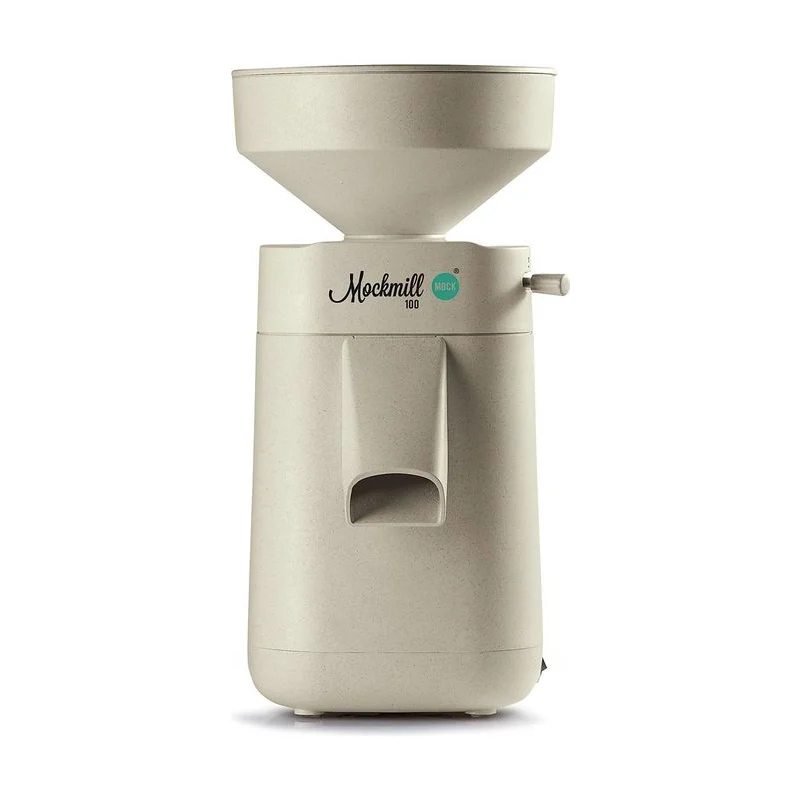
- Hopper capacity, KoMo Fidibus Classic
- Approx. 1,000 g of wheat
- Hopper capacity, Mockmill 100
- 1,100 g | 2 lbs 7 oz (wheat)
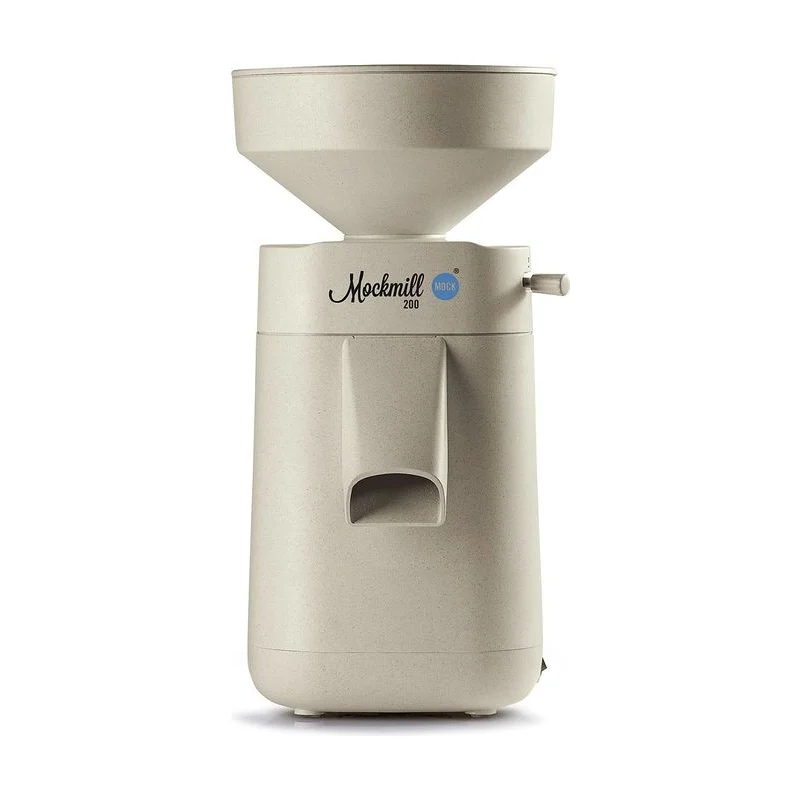
- Motor, KoMo Fidibus Classic
- 360 watts
- Motor, Mockmill 200
- 600 W
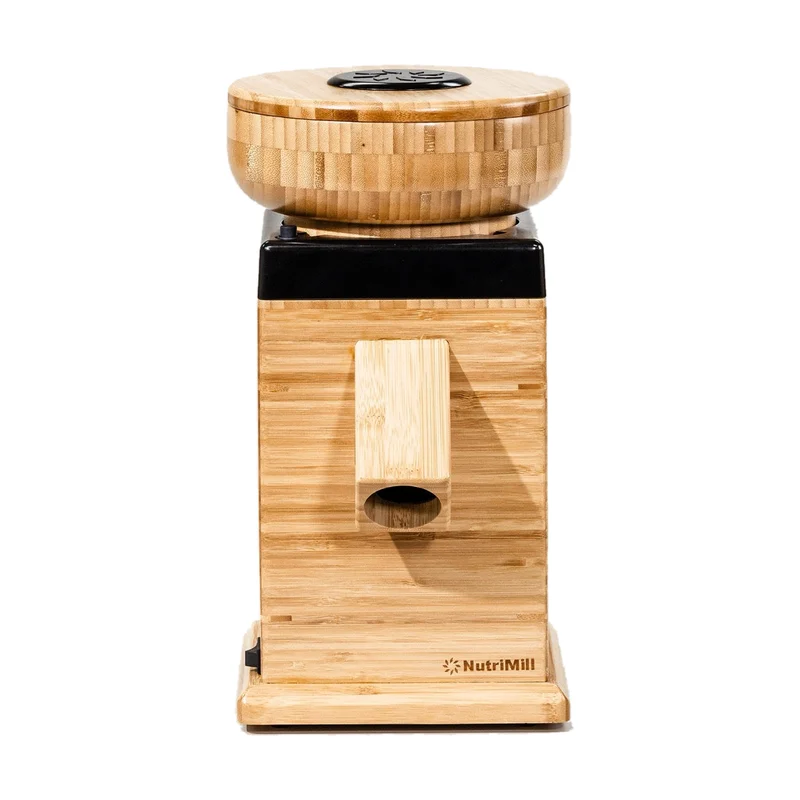
- Motor, KoMo Fidibus Classic
- 360 watts
- Motor, NutriMill Harvest
- 450 watts
The comparisons this mill appears in
Each of these decides this mill against one other model, on the rows both makers publish.
- Mockmill 100 vs KoMo Fidibus ClassicBoth mill on corundum ceramic stones at 360 watts. The split is the case: Terluran GP-35 against oiled beech, six years of warranty against twelve.
The documents this page was read from
- KoMo — Fidibus Classic grain mill, official product page
- KoMo — official warranty terms
- KoMo — overview of milled product: which devices process which materials
- KoMo — operating instructions for mills and flakers, English owner manual (PDF, February 2021)
- KoMo — download area, source of the owner manual
- Pleasant Hill Grain — KoMo Classic grain mill product page and specifications tab (authorized US importer)
- Pleasant Hill Grain — what can you grind in your KoMo grain mill (PDF grinding list)
Prices and availability are on the seller’s site. Amazon links are affiliate links; we may earn a commission at no extra cost to you. Other seller links are unpaid.
- Publication
- By Millwright
- Source
- Manufacturer documentation
- Reviewed
- Documented
- 9 of 10 attributespublished by the makerCounts published attributes, not quality.