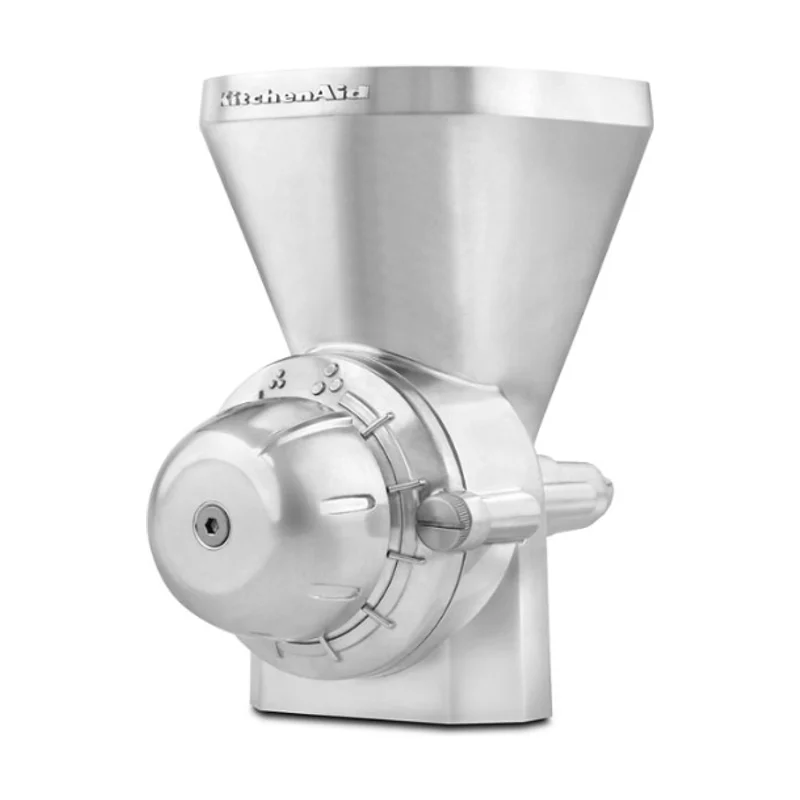
The KitchenAid Grain Mill Attachment (KGM) has no motor of its own
What this section establishes
- No wattage, amperage or voltage figure is published for the KGM, and none can be: KitchenAid states the attachment runs off the power hub of any household KitchenAid stand mixer, sold separately, so every motor question a mill buyer asks lands on a machine that is not part of this purchase.
- KitchenAid lists two included accessories, the attachment and a cleaning brush, and no flour container, hopper extension or spare burr set. The mill body itself serves as the hopper, and no fetched document states how much grain it holds at once.
- The three published dimensions are not stated to be the attachment’s own. A depth of 8-19/64 in, a height of 7-51/64 in and a width of 4-1/2 in sit under Technical Specifications beside a gross weight of 5.4 lbs, and KitchenAid does not say whether they describe the KGM or its carton.
The KitchenAid All Metal Grain Mill carries the identifier KGM on its manufacturer product page, and it draws no electricity of its own. KitchenAid states that the attachment “attaches directly to the power hub of any household KitchenAid Stand Mixer” to grind wheat, oats, corn, rice and other low-moisture, low-oil grains, with the mixer sold separately. Every question a buyer normally asks about a mill’s motor, including wattage, amperage and duty rating, therefore lands on a machine that is not part of this purchase and may already be sitting on the counter.
The box holds two items: the grain mill attachment and a cleaning brush. KitchenAid lists no flour container, no hopper extension and no spare burr set. The mill body itself performs the hopper role, and the manual describes the grain mill body as the part that “serves as a hopper; guides grains into grinding burr”. There is no separate vessel to fill, and no published figure for how much grain the body holds at once.
KitchenAid’s Technical Specifications group for the KGM lists a depth of 8-19/64 in, a height of 7-51/64 in and a width of 4-1/2 in, a gross weight of 5.4 lbs, and a net weight of 0 lbs. The 0 lbs entry is not a measurement. It contradicts the gross weight published in the same block, and it is the clearest signal that this specification group was populated for shipping logistics rather than for a buyer comparing hardware. The page does not state whether the three dimensions describe the attachment or its carton.
The construction claim rests on the product name and one sentence of body copy. KitchenAid calls the product the All Metal Grain Mill and describes “the all-metal KitchenAid Grain Mill Attachment” in its opening paragraph. No field in the specification table states a housing material, and no fetched source names the alloy used for the housing or for the burrs.
| Published field | What KitchenAid states | Where the figure is published | Read from |
|---|---|---|---|
| Model / SKU | KGM | Product title and SKU on the KitchenAid product page | kitchenaid.com product page |
| Motor | None. The attachment runs off the power hub of any household KitchenAid stand mixer, sold separately | Opening description on the KitchenAid product page | kitchenaid.com product page |
| Depth | 8-19/64 in | Technical Specifications group, KitchenAid product page | kitchenaid.com product page |
| Height | 7-51/64 in | Technical Specifications group, KitchenAid product page | kitchenaid.com product page |
| Width | 4-1/2 in | Technical Specifications group, KitchenAid product page | kitchenaid.com product page |
| Gross weight | 5.4 lbs | Technical Specifications group, KitchenAid product page | kitchenaid.com product page |
| Net weight | 0 lbs, which cannot be reconciled with the gross weight beside it | Technical Specifications group, KitchenAid product page | kitchenaid.com product page |
| California Prop 65 | CA | General Specifications group, KitchenAid product page | kitchenaid.com product page |
| In the box | 2 included accessories: the grain mill attachment and a cleaning brush | Model KGM includes block, KitchenAid product page | kitchenaid.com product page |
| Housing material | Not stated in any document read. All Metal is the product name and an adjective in the body copy, not a specification field | No KitchenAid document read publishes one | Not stated in any document read for this page. |
| Burr material | Not stated in any document read | No KitchenAid document read publishes one | Not stated in any document read for this page. |
| Hopper capacity | Not stated in any document read. The manual says only that the grain mill body serves as a hopper | No KitchenAid document read publishes one | Not stated in any document read for this page. |
The three dimensions sit under Technical Specifications beside a gross weight field, which would be consistent with carton dimensions, but KitchenAid does not say whether they describe the attachment or its packaging. The table settles what is published, not which of the two readings is right.

Inside the KGM: the grind worm, the movable burr and the adjustment knob
The KGM mills by burr. KitchenAid’s use-and-care guide names four parts in the grinding train: the grain mill body, which “serves as a hopper; guides grains into grinding burr”; the grind worm, which “drives grinding action”; the movable burr, which “grinds whole grains into flour”; and the adjustment knob, which “adjusts the fineness of the grind”. Grain enters the body, the worm feeds it to the burr, the burr grinds it, and the knob sets how fine what comes out is.
Burr is a mechanism class, not a material claim. A burr grinds between hard grinding surfaces; a stone is a burr grinding surface made of bonded abrasive; an impact mill instead uses a chamber that shatters grain. No KitchenAid source fetched for this page describes the KGM as an impact or micronizer design, and none describes a stone. The mechanism choice underneath this decision, and what it changes about texture and heat, is set out at Impact vs stone burr grain mills.
The burr material is not published. KitchenAid names the product All Metal and calls it all-metal in prose, but no fetched source states whether the burrs are stainless steel, cast iron or a hardened alloy. The manual’s only material-adjacent statement is that the grinding burrs ship “lightly coated with mineral oil to help prevent rusting during storage”, which is a storage instruction rather than a metallurgy statement. A buyer comparing burr longevity across mills has nothing published here to compare against.
The attachment has no independent grinding speed. The mixer sets it. KitchenAid’s instructions direct the operator to start the mixer at Speed 10 once grain is added, which ties the burr’s rotational input to whatever the mixer’s top setting delivers. That is an instruction about where to start a run, not a rated operating speed, and no fetched source states a maximum, a minimum or a range for the attachment itself.
How much the KGM mills in one run: 10 cups of flour, then 45 minutes off
What this section establishes
- KitchenAid caps the KGM at 10 cups (2.4 L) of flour at one time and requires at least 45 minutes of mixer cool-down before the next run. The limit protects the stand mixer, and KitchenAid names damage to the mixer as the consequence of exceeding it.
- Yield converts that ceiling into a shopping figure: KitchenAid states one cup of most grains yields approximately 1 1/4 to 1 1/2 cups of flour, and one cup of oats yields approximately 7/8 cup.
- No document describes automatic protection. Neither Product Help page names a thermal cut-out or an overload sensor, and KitchenAid publishes no figure for how long a 10-cup run takes, so the ceiling is enforced by an operator counting cups.
The 10-cup ceiling is the hardest constraint on this attachment, and it exists to protect the mixer rather than the mill. KitchenAid states: “Do not grind more than 10 cups (2.4 L) of flour at one time; damage to the mixer may result. After grinding 10 cups (2.4 L) of flour, allow the mixer to cool for at least 45 minutes before using it again.” A standalone mill’s ceiling is usually set by its own motor. Here the ceiling is a household stand mixer being asked to carry a burr load at its top speed, and the consequence KitchenAid names is damage to that mixer.
Yield converts the ceiling into a shopping figure. KitchenAid states that one cup of most grains yields approximately 1 1/4 to 1 1/2 cups of flour, and that one cup of oats yields approximately 7/8 cup of flour. Inverting KitchenAid’s own ratio, a full 10-cup run of wheat flour comes from roughly 6 2/3 to 8 cups of berries, while 10 cups of oat flour would take more oats by volume than the flour produced. That arithmetic is derived from the published ratio, not separately published by KitchenAid. The workflow it sits inside, including how much flour a bake actually needs and how soon fresh flour should be used, is covered at How to mill your own flour.
The cool-down is a wall-clock cost rather than a suggestion. A baker who needs 20 cups of flour mills 10, leaves the mixer idle for at least 45 minutes, and mills the second 10. KitchenAid publishes no figure for how long a 10-cup run itself takes, so total session time cannot be calculated from the documentation. What the documentation does establish is that the stand mixer is unavailable for its primary job during both the run and the cool-down, which is a scheduling constraint on the whole kitchen rather than on the attachment alone.
KitchenAid’s Grain Mill Tips page frames the same limit in looser wording, describing the capacity as the equivalent of 10 cups of flour on Speed 10. The two statements agree on the number and differ in what they attach it to: the Tips page ties the ceiling to the speed setting, and the How to Use page ties it to a cool-down interval. Neither describes a thermal cut-out, an overload sensor or any automatic protection, so the ceiling is enforced by an operator counting cups.
NOTE: Do not grind more than 10 cups (2.4 L) of flour at one time; damage to the mixer may result. After grinding 10 cups (2.4 L) of flour, allow the mixer to cool for at least 45 minutes before using it again.
| Published limit | What KitchenAid states | Document | Read from |
|---|---|---|---|
| Maximum flour per run | 10 cups (2.4 L) at one time; more may damage the mixer | Product Help, How to Use the Grain Mill | producthelp.kitchenaid.com product page |
| Cool-down after a full run | At least 45 minutes before using the mixer again | Product Help, How to Use the Grain Mill | producthelp.kitchenaid.com product page |
| Speed | Start the mixer at Speed 10 once the grain is added | Owner’s manual, headed Model KGMA | Owner manual (PDF) |
| Yield, most grains | One cup of grain yields approximately 1 1/4 to 1 1/2 cups of flour | Product Help, Grain Mill Tips | producthelp.kitchenaid.com product page |
| Yield, oats | One cup of oats yields approximately 7/8 cup of flour | Product Help, Grain Mill Tips | producthelp.kitchenaid.com product page |
| Time a 10-cup run takes | Not stated in any document read | No KitchenAid document read publishes one | Not stated in any document read for this page. |
| Automatic overload protection | Not stated in any document read; no thermal cut-out or overload sensor is described | No KitchenAid document read publishes one | Not stated in any document read for this page. |
The 10-cup ceiling is a flour output limit protecting the stand mixer, not a hopper capacity, and KitchenAid publishes no hopper figure. Whether a second pass over hard grains counts against the same ceiling is not stated.
The KGM's adjustment knob: notches, the count of 12, and where KitchenAid starts a run
What this section establishes
- The KGM’s product page states 12 grind levels on the dial, from a very coarse “cracked” grind to a fine grind. Neither Product Help page nor the linked owner’s manual states any count, so the figure of 12 rests on promotional copy alone.
- KitchenAid’s published starting position is not the finest notch. The instruction is to turn the knob clockwise to the Fine Grind symbol, then immediately back two notches, and to correct one notch at a time from there.
- Hard grains may need two passes. KitchenAid states that corn and other hard grains may require starting at a coarser level followed by a second grind at a finer level, and does not state whether the second pass counts against the 10-cup ceiling.
Texture adjusts through a notched knob rather than a continuous control. KitchenAid states: “The grind symbols are at the top of the dial. The Fine Grind symbol (A) indicates the finest grind setting. The Coarse Grind symbol (B) indicates the setting for the grind that is most coarse. Each notch on the dial represents a grind setting.” The product page states a count of 12 levels on the dial, running from a very coarse “cracked” grind to a fine grind.
The published starting procedure does not begin at the finest notch. KitchenAid’s How to Use page instructs selecting the finest setting by turning the adjustment knob “clockwise to the Fine Grind symbol (A) and immediately turn the adjustment knob back two notches”, then correcting from there: “If the grind is too fine, turn the adjustment knob counterclockwise, one notch at a time, until desired coarseness is obtained.” The finest notch is where the dial is indexed from, not where KitchenAid directs a run to start.
Hard grains may require two passes. KitchenAid states: “When grinding corn or other types of hard grains, to achieve a finer grain, it may be necessary to start at a higher/coarser level followed by a second grind at a finer level.” That interacts directly with the ceiling described above, because a two-pass corn batch runs the mixer twice for one batch of meal. KitchenAid does not state whether the second pass counts against the 10-cup limit, so the documentation gives no guidance on how to schedule a double-pass batch against the cool-down.
The count of 12 appears only in the product page’s promotional copy. Neither Product Help page states how many notches the dial carries, and neither does the linked owner’s manual; all three describe the notches only in the general form quoted above. A buyer treating 12 as a hard specification is relying on marketing text that KitchenAid’s own instructional documentation does not corroborate. That divergence is one of several set out below.
How KitchenAid’s Product Help pages describe setting the dial, each step attributed to the page that carries it
- Turn the adjustment knob clockwise to the Fine Grind symbolKitchenAid’s How to Use the Grain Mill page states that the grind symbols are at the top of the dial: the Fine Grind symbol (A) indicates the finest grind setting, the Coarse Grind symbol (B) indicates the setting for the grind that is most coarse, and each notch on the dial represents a grind setting.
- Immediately turn the knob back two notchesThe same How to Use page instructs selecting the finest setting by turning the knob clockwise to the Fine Grind symbol “and immediately turn the adjustment knob back two notches”. The finest notch is the index position, not the position a run starts from.
- Correct one notch at a time if the grind is too fineAlso on the How to Use page: “If the grind is too fine, turn the adjustment knob counterclockwise, one notch at a time, until desired coarseness is obtained.” KitchenAid publishes no notch-to-texture map, so the correction is made against the flour in front of the operator.
- For corn and other hard grains, a coarse pass firstThis one is on KitchenAid’s Grain Mill Tips page rather than How to Use: “When grinding corn or other types of hard grains, to achieve a finer grain, it may be necessary to start at a higher/coarser level followed by a second grind at a finer level.” Whether that second pass counts against the 10 cups per run is not stated.
KitchenAid states the finest setting reaches fine cornmeal, not white flour
What this section establishes
- No particle-size figure bounds the KGM’s fineness. KitchenAid publishes no micron figure, no sieve mesh equivalent and no particle-size distribution for this attachment; the phrase “more comparable to fine cornmeal” is the whole of the fineness specification.
- The comparison is against sifted commercial white flour, not against other whole-grain mills. KitchenAid attributes the difference to milling the entire grain berry including the bran, and makes no ranking claim about the KGM against any other mill.
- A recipe written for store-bought white flour is written for a finer flour than KitchenAid says this attachment reaches at its finest setting, before any hydration or sifting decision enters the picture.
KitchenAid publishes a ceiling on its own product’s output, and it is the most useful sentence in the entire documentation set: “At the finest setting, the consistency of the flour will not be as fine as store-bought white flour, but more comparable to fine cornmeal. This is because the mill is using the entire grain berry, including the bran that is removed for white flour.”
Read that against the dial. The finest notch is not a fine-flour setting; it is the finest this arrangement reaches on whole berries, and KitchenAid attributes the difference to the bran rather than to the burr. A baker planning to substitute this flour one for one into a recipe written for commercial white flour is working against a texture the manufacturer has already described as coarser than that, before any hydration or sifting decision enters the picture.
No particle-size figure supports the comparison. KitchenAid states the result qualitatively and stops. There is no published particle-size distribution, no sieve mesh equivalent, and no statement about how much of the difference is bran fragment rather than endosperm granularity. The phrase “more comparable to fine cornmeal” is the whole of the fineness specification, and no micron figure for this attachment is published by KitchenAid on any fetched source.
The bran explanation also fixes the comparison class. KitchenAid attributes the coarseness to milling the entire berry including bran, which is the same input any whole-grain mill handles. The statement is about this attachment’s output relative to sifted commercial flour. It is not a ranking against other whole-grain mills, KitchenAid makes no such ranking claim, and none should be read into it from this sentence.
At the finest setting, the consistency of the flour will not be as fine as store-bought white flour, but more comparable to fine cornmeal. This is because the mill is using the entire grain berry, including the bran that is removed for white flour.
What the KGM can mill: KitchenAid's permitted grains and its do-not-grind list
What this section establishes
- KitchenAid frames the KGM’s whole ingredient scope as “low-moisture, non-oily grains” and names eight of them: wheat, corn, rye, oats, rice, buckwheat, barley and millet.
- The exclusions are oil-led rather than hardness-led. Coffee beans, sesame seeds, peanuts, sunflower seeds and soybeans are named, with damage to the grinding mechanism given as the consequence, and a product-page answer rules out grating hard cheese such as Parmesan.
- Neither list is exhaustive and KitchenAid does not claim otherwise. Ingredients on neither list, among them legumes, dried fruit and spices, have no published answer beyond KitchenAid’s low-moisture, low-oil test.
KitchenAid frames the entire ingredient scope around moisture and oil rather than hardness: “The Grain Mill Attachment is designed for low-moisture, non-oily grains such as wheat, corn, rye, oats, rice, buckwheat, barley, and millet.” Oil is the failure mode named in every exclusion KitchenAid publishes, and the consequence named is damage to the grinding mechanism.
The published permitted list, with KitchenAid’s own per-grain handling notes, followed by the do-not-grind entries:
The owner’s manual restates the exclusion in imperative form: “Do not grind peanuts, coffee beans, soybeans, or sunflower seeds with the Grain Mill; their high oil or high-moisture contents can damage the grinding mechanism.” The harm named is to the grinding mechanism, meaning the burr rather than the mixer that drives it. This is the one failure mode in the documentation that the operator can cause outright with a single wrong ingredient, and it is not covered by any warning device on the attachment.
Neither list is exhaustive, and KitchenAid does not claim either one is. Ingredients that appear on neither list are simply not addressed by the documentation reviewed here. The operative test KitchenAid publishes is the framing phrase itself: low moisture, low oil. A buyer holding an ingredient that appears on neither list has no manufacturer answer to read, and this page does not supply one in KitchenAid’s place.
- Wheat - hard wheat for bread flour, soft wheat for cakes and cookies, and the two mixed for all-purpose flour.
- Corn - KitchenAid states to grind fine for baking and coarse for cornmeal mush.
- Rye.
- Oats - must be hulled before grinding for flour, or use rolled oats.
- Rice - KitchenAid states both white and brown rice grind well.
- Buckwheat - for best results hulled first; raw and toasted both grind well.
- Barley - for best results hulled first.
- Millet.
- Excluded: coffee beans, because KitchenAid states their high oil content can damage the grinding mechanism.
- Excluded: sesame seeds, peanuts, sunflower seeds and soybeans, named as grains or nuts with a high moisture or oil content.
- Excluded: hard cheese, because KitchenAid’s product-page answer states the attachment is for non-oily grains only and cannot be used to grate Parmesan cheese.
Before the first run: washing off the mineral oil, and why the KGM is not dishwasher safe
The burrs arrive oiled and require washing before the first use. KitchenAid states: “The grinding burrs of this unit have been lightly coated with mineral oil to help prevent rusting during storage. Before using the grain mill, wash off the oil with a mild detergent solution and dry thoroughly.” The manual names the consequence of skipping the step, which is that the burrs become clogged and the grinding action slows down. That makes it a performance step rather than a hygiene formality, and it is the first thing an owner does with the attachment.
Routine cleaning is brush-first. The cleaning brush is one of the two items in the box, and KitchenAid states “Do not wash Grain Mill or any of its parts in an automatic dishwasher” and “Never immerse Grain Mill in water or other liquid.” Where washing is required, KitchenAid directs hand washing with mild detergent and warm water. The dishwasher prohibition is unconditional in its wording and covers any of the attachment’s parts, not only the burrs.
The two instructions interact. The burrs ship pre-oiled specifically to prevent rust in storage, and the same document forbids immersion and machine washing. KitchenAid does not state the reason for the dishwasher exclusion, so this page reports the instruction rather than a rationale.
Between-uses care is not covered. KitchenAid publishes a wash instruction and a “dry thoroughly” instruction for the pre-use oil removal, but no fetched source states a drying protocol between milling sessions, a recommended cleaning interval, whether residual flour should be brushed out after every run, or whether the burrs should be re-oiled before long storage. Owners of a metal burr mill will recognize all four as live questions; KitchenAid answers none of them for the KGM.
Where KitchenAid's own documentation disagrees with itself
The KGM’s paperwork carries more internal contradiction than any single specification on it. Four items are material to a buyer, one of them is a data-entry error that KitchenAid has published inside a specification table, and one is a copy error in the product description. None is reconciled by KitchenAid, so all of them are reported here as they stand rather than resolved.
Two further provenance points belong in the open rather than in a footnote. The country of manufacture, China, comes from a KitchenAid-authored answer in the product page’s question-and-answer block, not from a specification field, a rating label or the manual. And the California Prop 65 entry in the General Specifications group carries only the value “CA”; the cancer and reproductive harm wording that renders on the page is site-wide template text applied to any flagged product, rather than text KitchenAid authored about this grain mill. Both facts are true. Neither has the evidentiary weight of a specification field, and this page does not present them as though it does.
- Model identifier. The product page carries the identifier KGM and the sku KGM. The Owner’s Manual PDF that KitchenAid links from that same product page is headed “Model KGMA”. KitchenAid’s own Product Help distinguishes the generations in plain terms, stating that the original grain mill did not grind as finely as the later models KGMA and KGM. The linked manual is therefore written for a predecessor of the model on sale, and no KGM-specific manual was found on kitchenaid.com.
- Everything read from that manual inherits the caveat. The component names, the Speed 10 starting instruction, the warranty term, the household-use scope, the pre-use oil removal and the cleaning prohibitions all come from the KGMA-headed document. They are the best documentation KitchenAid links for this product; they are not documentation written about this product’s model number.
- Net weight against gross weight. The Technical Specifications group publishes “Gross Weight: 5.4 lbs” and “Net Weight: 0 lbs” in the same block. The 0 lbs value cannot be reconciled with the gross figure beside it and is an evident placeholder. KitchenAid publishes no usable net weight for the attachment.
- The number of grind settings. The product page states 12 levels on the dial. Neither Product Help page nor the linked manual states a count; all describe only that each notch on the dial represents a grind setting. The count rests on promotional copy alone, and the instructional documentation neither confirms nor contradicts it.
- The fine-grind starting procedure. Product Help instructs turning the knob clockwise to the Fine Grind symbol “and immediately turn the adjustment knob back two notches”. The linked manual’s corresponding step stops at the Fine Grind symbol without the two-notch back-off. The divergence may be generational, given that the manual addresses KGMA and Product Help addresses current guidance, but KitchenAid links both from the same product page and reconciles neither.
- The power-hub description. The product page’s opening sentence states the hub connection for the grain mill correctly. A second block on the same page explaining how the hub drives the attachment names the spiralizer attachment instead of the grain mill. It is a copy error rather than a specification conflict, and it is recorded here because a reader checking this page against KitchenAid’s will otherwise find the discrepancy unexplained.
Warranty, household-use scope and the Prop 65 label
The warranty term available to read is one year, and it is read from the KGMA-headed manual. The warranty table states a one-year full warranty from date of purchase, with hassle-free replacement of the Grain Mill, scoped to the 50 United States and the District of Columbia. A limited one-year warranty extends separately to Grain Mills operated in Puerto Rico. Those are the only warranty figures published across the sources fetched for this page.
KitchenAid’s customer-care warranty page carries no model-specific term for this attachment, and the KGM product page renders a generic guarantee label with no number in it. A buyer who wants the term confirmed against the model actually being sold has, on KitchenAid’s own site, only the predecessor model’s manual to read it from. This page states the one-year term as what that document says, not as a settled KGM specification, and lists the warranty page in the sources below for readers checking whether KitchenAid has since published a model-specific term.
Intended use is household only. Item 13 of the manual’s important safeguards states that the product is designed for household use only, and the warranty section reinforces it from the exclusion side by ruling out repairs where the Grain Mill is used in other than normal single family home use. A buyer considering the attachment for a small bakery, a market stall or a shared commercial kitchen is outside both the stated design scope and the warranty as written, and the 10-cup ceiling makes that boundary practical rather than merely legal.
California Prop 65 applies to the product. The General Specifications group carries a Prop 65 field with the value “CA”, and the page renders California’s cancer and reproductive harm warning. KitchenAid names no substance, publishes no component-level detail for this attachment, and the warning wording itself is a site-wide template string rather than product-specific text. The applicability is a published fact; the specifics behind it are not published.
Buying the KitchenAid grain mill attachment instead of a standalone electric mill
The KGM is decided on a different axis from a standalone mill, and the comparison a stand mixer owner should run is not fineness against fineness. It is duty cycle and output texture on one side against counter space and a second motor on the other. Nothing in KitchenAid’s documentation positions this attachment as a substitute for a dedicated mill, and its own published constraints describe an accessory rather than an appliance.
Three of those constraints are structural rather than incidental. The attachment has no motor of its own, so its ceiling is a stand mixer’s tolerance rather than a mill’s rating. It mills 10 cups of flour and then requires at least 45 minutes of cool-down. And KitchenAid states its finest output is more comparable to fine cornmeal than to store-bought white flour. None of the three improves with technique, a better grain, or a longer run; they are properties of the arrangement itself.
A dedicated electric mill inverts each one: its own motor, its own duty rating, and a grinding assembly sized for the job rather than borrowed from a mixer. The published specifications for one such machine are set out at Mockmill 100 Stone Grain Mill, and the useful comparison is between two complete specification sets rather than between a mill and an accessory.
The case for the attachment is narrow and real. A household that already owns a KitchenAid stand mixer, mills in batches under 10 cups, and wants whole-grain flour rather than a white-flour substitute is buying a metal burr head and a brush instead of a second appliance. A household that mills weekly in volume, or that needs a texture finer than fine cornmeal, is reading the wrong specification sheet, and KitchenAid’s own fineness statement says so more plainly than any third-party review could.
One compatibility point deserves care before purchase. KitchenAid states the attachment fits the power hub of any household KitchenAid stand mixer, with the mixer sold separately. No fetched source enumerates which mixer models that covers, distinguishes tilt-head from bowl-lift designs, or names a minimum mixer capability. A buyer with an older or a light-duty mixer has KitchenAid’s blanket phrase and nothing more granular to check it against, which matters more here than on any other attachment because the mixer is carrying the entire mechanical load.
What KitchenAid does not publish about the KGM
No motor rating exists to quote, and that is a property of the product rather than a gap in the research. The KGM has no motor. KitchenAid publishes no wattage, amperage or voltage figure on the product page, in the specification table or in the manual, because the electrical characteristics that would matter belong to the stand mixer the buyer supplies.
Hopper capacity is not published. The manual states only that the grain mill body serves as a hopper. No figure in cups, liters or grams appears on any fetched source. The 10-cup figure that circulates for this attachment is a per-run flour output limit protecting the mixer, not a hopper measurement, and conflating the two overstates what the body holds at once.
Flour container capacity does not apply. No container is supplied, since the box holds the attachment and a cleaning brush, and KitchenAid specifies no container capacity anywhere.
Burr material is not stated. All Metal is a product name and an adjective in the body copy; no fetched source names stainless steel, cast iron or any specific alloy for the burrs or the housing. The mineral-oil note establishes only that the burrs can rust if stored uncleaned.
Net weight is not usable and the dimension basis is ambiguous. The published net weight is 0 lbs. The depth, height and width figures sit under Technical Specifications beside a gross weight field, which would be consistent with carton dimensions, but KitchenAid does not say which they are, so neither reading is asserted here.
No measured performance figure is published. There is no milling throughput or time-per-cup rating, no noise rating in decibels, no flour temperature, no particle size in microns, no nutrient-retention claim and no burr lifespan figure. KitchenAid’s only fineness statement is the qualitative cornmeal comparison quoted above. Any number in those categories attributed to the KGM elsewhere did not come from KitchenAid’s published documentation.
Several ingredient questions have no published answer. The documentation names a permitted grain list and a do-not-grind list, and nothing more. Items outside both lists, including legumes, dried fruit and spices, are not covered by any statement KitchenAid publishes. The only general test available is the framing phrase KitchenAid uses for the whole category: low moisture, low oil.
This page rests entirely on KitchenAid’s published documentation as reviewed on the date shown. Nothing here reflects possession, unboxing, use or measurement of the attachment. Where two KitchenAid documents disagree, both readings are reported above rather than reconciled, and where KitchenAid publishes nothing, this page says so instead of estimating.
Does the KitchenAid grain mill attachment fit every KitchenAid stand mixer?
KitchenAid states that the attachment attaches directly to the power hub of any household KitchenAid stand mixer, with the mixer sold separately. No fetched source enumerates the covered models, distinguishes tilt-head from bowl-lift mixers, or names a minimum mixer capability. The word household is doing real work in that sentence, because the manual separately limits the product to household use only and the warranty excludes use outside normal single family home use. A buyer with an older mixer, or one bought outside the United States, has only KitchenAid’s blanket phrase to rely on and should confirm hub compatibility with KitchenAid before purchase, since the product page publishes no model list to check against.
How much flour can the KitchenAid grain mill attachment mill at one time?
Ten cups. KitchenAid states: “Do not grind more than 10 cups (2.4 L) of flour at one time; damage to the mixer may result. After grinding 10 cups (2.4 L) of flour, allow the mixer to cool for at least 45 minutes before using it again.” The limit protects the stand mixer rather than the burr, which is why it is expressed as a cool-down for the mixer. KitchenAid publishes no figure for how long a 10-cup run takes, so the full cycle time for a larger bake cannot be calculated from the documentation, only that the mixer is out of service for at least 45 minutes between runs. Nothing in the fetched sources describes an automatic cut-out or overload protection, so the ceiling is enforced by the operator measuring output.
Does the KitchenAid grain mill attachment make flour as fine as store-bought white flour?
No, and KitchenAid states it directly: “At the finest setting, the consistency of the flour will not be as fine as store-bought white flour, but more comparable to fine cornmeal. This is because the mill is using the entire grain berry, including the bran that is removed for white flour.” For hard grains, KitchenAid adds that reaching a finer result may require starting at a higher or coarser level followed by a second grind at a finer level. No particle-size figure in microns is published for this attachment, so the cornmeal comparison is the entire published specification for output fineness, and there is no measured basis for comparing it numerically against any other mill.
Is the KitchenAid grain mill attachment dishwasher safe?
No. The manual states “Do not wash Grain Mill or any of its parts in an automatic dishwasher” and “Never immerse Grain Mill in water or other liquid.” Where washing is necessary, KitchenAid directs hand washing with mild detergent and warm water. The cleaning brush included in the box is one of the attachment’s two supplied items and is the intended routine tool. Separately, and before any of that applies, the grinding burrs ship lightly coated with mineral oil to prevent rusting in storage and must be washed off and dried thoroughly before the first use; KitchenAid states that leaving the oil on causes the burrs to become clogged and the grinding action to slow down.
What warranty covers the KitchenAid grain mill attachment?
The term available to read is a one-year full warranty from date of purchase, with hassle-free replacement of the Grain Mill, scoped to the 50 United States and the District of Columbia, plus a limited one-year warranty for units operated in Puerto Rico. Coverage excludes repairs where the mill is used in other than normal single family home use. That language comes from the Owner’s Manual PDF KitchenAid links from the product page, a document headed “Model KGMA” rather than KGM. KitchenAid’s customer-care warranty page carries no model-specific term for this attachment, and the KGM product page renders a generic guarantee label with no number, so the one-year figure should be read as the predecessor manual’s term rather than as a confirmed KGM specification.
Every published figure, with the document it came from
Every row this maker publishes for this mill, printed as its own document prints it, with the document named beside it.
| Attribute | As published | Read from |
|---|---|---|
| Milling mechanism | Metal burr: a grind worm drives the grinding action and a movable burr grinds whole grains into flour | Owner manual (PDF) |
| Motor | None. Attaches directly to the power hub of any household KitchenAid stand mixer; mixer sold separately | kitchenaid.com product page |
| Hopper capacity | Not published. The manual states only that the grain mill body serves as a hopper | Owner manual (PDF) |
| Flour container capacity | Not applicable. No flour container is supplied; the box holds the attachment and a cleaning brush | kitchenaid.com product page |
| Texture adjustment | Adjustment knob with notched settings; the product page states 12 levels, from a very coarse "cracked" grind to a fine grind | kitchenaid.com product page |
| Maximum batch per run | 10 cups (2.4 L) of flour at one time, then at least 45 minutes of mixer cool-down | producthelp.kitchenaid.com product page |
| Operating speed | The manual instructs starting the mixer at Speed 10 once grain is added; no maximum or range is rated | Owner manual (PDF) |
| Dimensions | Depth 8-19/64 in, height 7-51/64 in, width 4-1/2 in (basis not stated as product or carton) | kitchenaid.com product page |
| Weight | Gross weight 5.4 lbs; net weight published as 0 lbs, an evident placeholder | kitchenaid.com product page |
| Housing | All metal, per the product name and the product page's description; no material field appears in the specification table | kitchenaid.com product page |
| Warranty | One-year full warranty from date of purchase with hassle-free replacement, for the 50 United States and the District of Columbia; limited one-year warranty in Puerto Rico | Owner manual (PDF) |
| Country of manufacture | China, per KitchenAid's answer in the product page question-and-answer block rather than a specification field | kitchenaid.com product page |
This mill against the other eight
The catalogue reduced to five columns and grouped by the mechanism each maker's own documents describe. This mill keeps its place in the order.
| Mill | Mechanism | Motor | Hopper | Warranty |
|---|---|---|---|---|
| Impact — the grain is shattered against steel heads, there is no gap to setTwo mills · 1,200 to 1,250 W | ||||
| NutriMill Classic Grain MillRead from NutriMill product page · Owner manual (PDF)View NutriMill Classic on Amazon | High-speed impact chamber with stainless steel Microburst milling heads | 1200 W, 10 amps | 12 cups 13 cups | 5 years parts and plastics; limited lifetime on motor and milling heads; original noncommercial purchaser only |
| WonderMill Electric Grain MillRead from Pleasant Hill Grain dealer specifications · WonderMill product page · Owner manual (PDF)View WonderMill Electric at Unsifted | Impact; two fin-studded stainless steel plates, one rotating | 1250 W LG Electronics motor (manufacturer states) | 8 cups (wheat) | Lifetime on milling heads to the original owner; six years on all other parts |
| Stone burr — the grain is ground between two corundum discs you can moveFour mills · 360 to 600 W | ||||
| Mockmill 100 Stone Grain MillRead from Mockmill product pageView Mockmill 100 at Mockmill USA | Corundum ceramic grinding stones | 360 W | 1,100 g | 2 lbs 7 oz (wheat) | 6 years, non-commercial use |
| KoMo Fidibus Classic Grain MillRead from KoMo product pageView KoMo Fidibus Classic at Pleasant Hill Grain | Stone burr; infinitely adjustable, self-sharpening, made of premium corundum ceramic | 360 watts | Approx. 1,000 g of wheat | 12 years on household grain mills |
| Mockmill 200 Stone Grain MillRead from Mockmill product pageView Mockmill 200 at Mockmill USA | Corundum ceramic grinding stones | 600 W | 1,100 g | 2 lbs 7 oz (wheat) | 6-year warranty for non-commercial use |
| NutriMill Harvest Grain MillRead from NutriMill product page · NutriMill technical illustrationView NutriMill Harvest on Amazon | Corundum stone burrs, upper and lower | 450 watts | 5 cups | 5 years against manufacturing defects in materials and workmanship |
| Steel burr — the grain is ground between steel platesThree mills · one at 1,500 W, two with no motor of their own | ||||
| Country Living Grain MillRead from Country Living product pageView Country Living Grain Mill on Amazon | Opposed burr plates — one fixed plate held by three screws, one rotating plate on the drive shaft, fed by an auger | — | 4 1/2 cups standard; nearly 11 cups with the optional hopper extension | Lifetime of the original owner on all parts excluding the finish; grinding plates one year |
| KitchenAid All Metal Grain Mill Attachment — this pageRead from Owner manual (PDF)View KitchenAid grain mill attachment on Amazon | Metal burr: a grind worm drives the grinding action and a movable burr grinds whole grains into flour | — | — | One-year full warranty from date of purchase with hassle-free replacement, for the 50 United States and the District of Columbia; limited one-year warranty in Puerto Rico |
| VEVOR Electric Grain Mill Grinder MFS-140Read from Owner manual (PDF) · VEVOR product listingView VEVOR MFS-140 at VEVOR | One stationary and one moving grinding plate, supplied as a dry-grinding pair and a wet-grinding pair | 1500 W | — | 12-month standard manufacturer's warranty, from VEVOR's site-wide policy rather than the product listing |
Impact — the grain is shattered against steel heads, there is no gap to set
Two mills · 1,200 to 1,250 W
NutriMill Classic Grain Mill
Read from NutriMill product page · Owner manual (PDF)
View NutriMill Classic on Amazon- Mechanism
- High-speed impact chamber with stainless steel Microburst milling heads
- Motor
- 1200 W, 10 amps
- Hopper
- 12 cups 13 cups
- Warranty
- 5 years parts and plastics; limited lifetime on motor and milling heads; original noncommercial purchaser only
WonderMill Electric Grain Mill
Read from Pleasant Hill Grain dealer specifications · WonderMill product page · Owner manual (PDF)
View WonderMill Electric at Unsifted- Mechanism
- Impact; two fin-studded stainless steel plates, one rotating
- Motor
- 1250 W LG Electronics motor (manufacturer states)
- Hopper
- 8 cups (wheat)
- Warranty
- Lifetime on milling heads to the original owner; six years on all other parts
Stone burr — the grain is ground between two corundum discs you can move
Four mills · 360 to 600 W
Mockmill 100 Stone Grain Mill
Read from Mockmill product page
View Mockmill 100 at Mockmill USA- Mechanism
- Corundum ceramic grinding stones
- Motor
- 360 W
- Hopper
- 1,100 g | 2 lbs 7 oz (wheat)
- Warranty
- 6 years, non-commercial use
KoMo Fidibus Classic Grain Mill
Read from KoMo product page
View KoMo Fidibus Classic at Pleasant Hill Grain- Mechanism
- Stone burr; infinitely adjustable, self-sharpening, made of premium corundum ceramic
- Motor
- 360 watts
- Hopper
- Approx. 1,000 g of wheat
- Warranty
- 12 years on household grain mills
Mockmill 200 Stone Grain Mill
Read from Mockmill product page
View Mockmill 200 at Mockmill USA- Mechanism
- Corundum ceramic grinding stones
- Motor
- 600 W
- Hopper
- 1,100 g | 2 lbs 7 oz (wheat)
- Warranty
- 6-year warranty for non-commercial use
NutriMill Harvest Grain Mill
Read from NutriMill product page · NutriMill technical illustration
View NutriMill Harvest on Amazon- Mechanism
- Corundum stone burrs, upper and lower
- Motor
- 450 watts
- Hopper
- 5 cups
- Warranty
- 5 years against manufacturing defects in materials and workmanship
Steel burr — the grain is ground between steel plates
Three mills · one at 1,500 W, two with no motor of their own
Country Living Grain Mill
Read from Country Living product page
View Country Living Grain Mill on Amazon- Mechanism
- Opposed burr plates — one fixed plate held by three screws, one rotating plate on the drive shaft, fed by an auger
- Motor
- —
- Hopper
- 4 1/2 cups standard; nearly 11 cups with the optional hopper extension
- Warranty
- Lifetime of the original owner on all parts excluding the finish; grinding plates one year
KitchenAid All Metal Grain Mill Attachment — this page
Read from Owner manual (PDF)
View KitchenAid grain mill attachment on Amazon- Mechanism
- Metal burr: a grind worm drives the grinding action and a movable burr grinds whole grains into flour
- Motor
- —
- Hopper
- —
- Warranty
- One-year full warranty from date of purchase with hassle-free replacement, for the 50 United States and the District of Columbia; limited one-year warranty in Puerto Rico
VEVOR Electric Grain Mill Grinder MFS-140
Read from Owner manual (PDF) · VEVOR product listing
View VEVOR MFS-140 at VEVOR- Mechanism
- One stationary and one moving grinding plate, supplied as a dry-grinding pair and a wet-grinding pair
- Motor
- 1500 W
- Hopper
- —
- Warranty
- 12-month standard manufacturer's warranty, from VEVOR's site-wide policy rather than the product listing
If this is not the mill
Three mills to read next, each with the first catalogue figure it prints differently from this one.
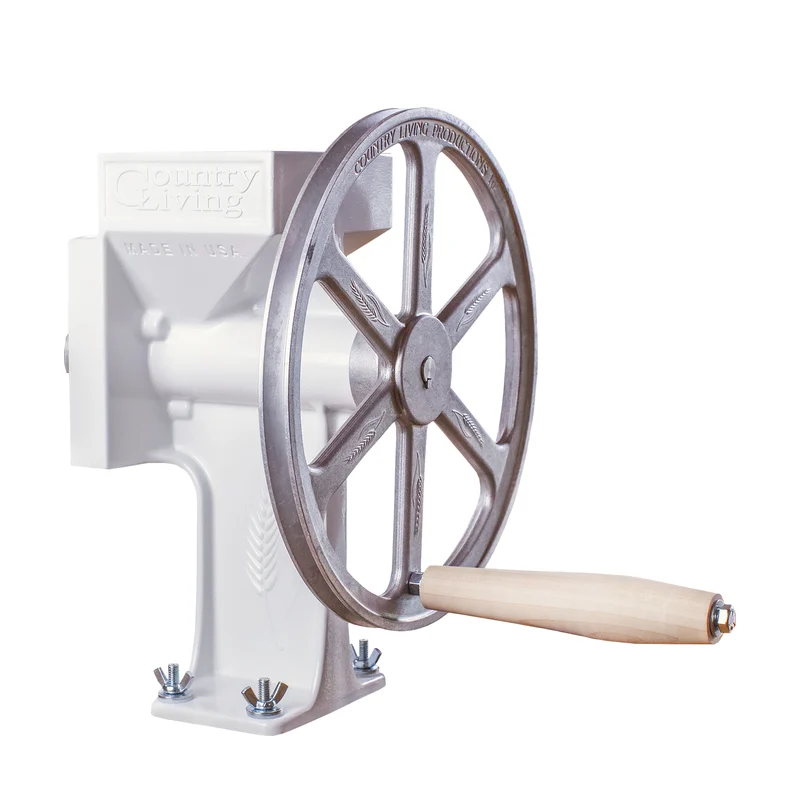
- Warranty, KitchenAid attachment
- One-year full warranty from date of purchase with hassle-free replacement, for the 50 United States and the District of Columbia; limited one-year warranty in Puerto Rico
- Warranty, Country Living
- Lifetime of the original owner on all parts excluding the finish; grinding plates one year
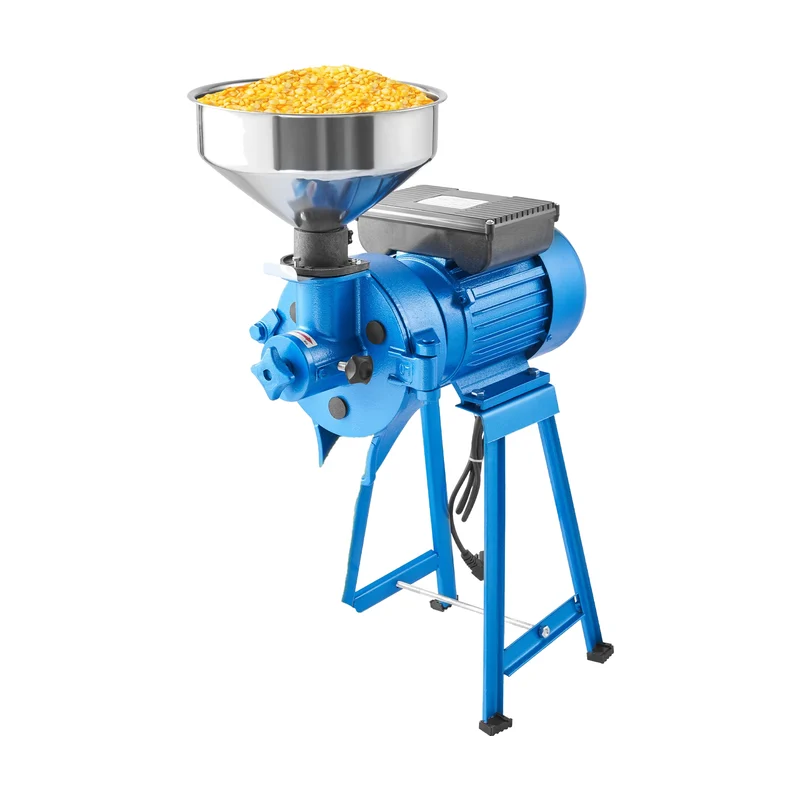
VEVOR Electric Grain Mill Grinder MFS-140
- Warranty, KitchenAid attachment
- One-year full warranty from date of purchase with hassle-free replacement, for the 50 United States and the District of Columbia; limited one-year warranty in Puerto Rico
- Warranty, VEVOR MFS-140
- 12-month standard manufacturer's warranty, from VEVOR's site-wide policy rather than the product listing
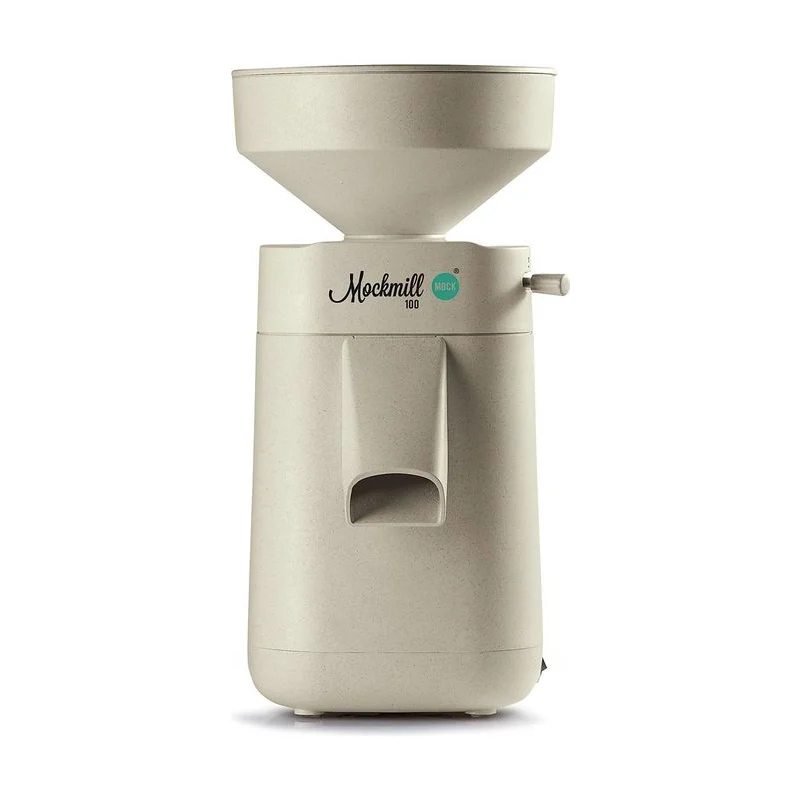
- Warranty, KitchenAid attachment
- One-year full warranty from date of purchase with hassle-free replacement, for the 50 United States and the District of Columbia; limited one-year warranty in Puerto Rico
- Warranty, Mockmill 100
- 6 years, non-commercial use
The documents this page was read from
- KitchenAid US - All Metal Grain Mill (KGM) product page
- KitchenAid Grain Mill - Instructions and Recipes / Use and Care Guide PDF, linked as Owner's Manual from the KGM product page and headed "Model KGMA"
- KitchenAid Product Help - Grain Mill Tips
- KitchenAid Product Help - How to Use the Grain Mill
- KitchenAid US - Countertop appliances warranty page (checked for a model-specific term; none published)
Prices and availability are on the seller’s site. Amazon links are affiliate links; we may earn a commission at no extra cost to you. Other seller links are unpaid.
- Publication
- By Millwright
- Source
- Manufacturer documentation
- Reviewed
- Documented
- 7 of 10 attributespublished by the makerCounts published attributes, not quality.