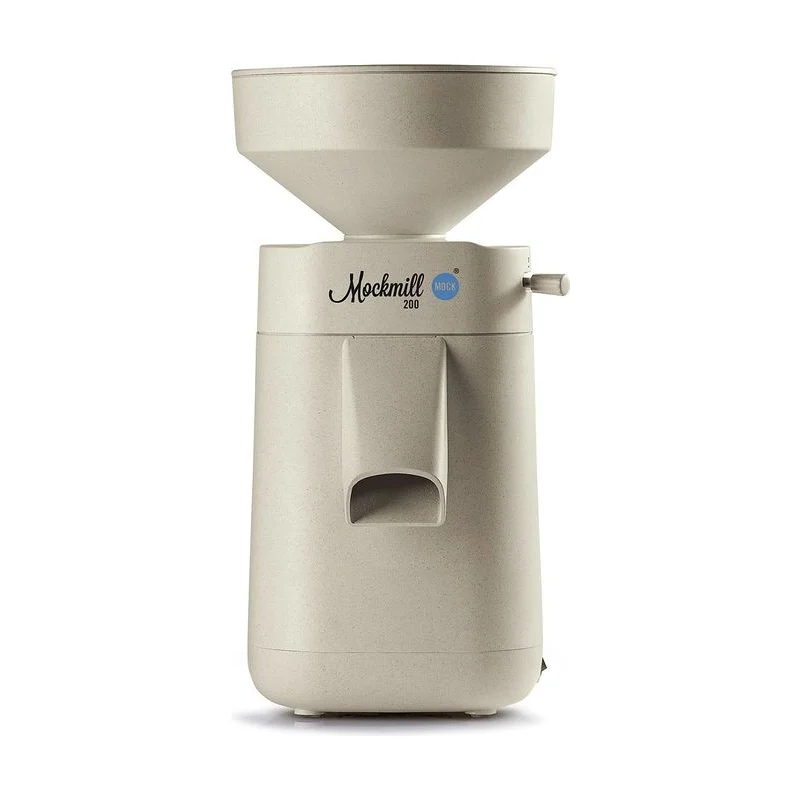
Four specification rows separate the Mockmill 200 from the Mockmill 100
What this section establishes
- Mockmill publishes four differing specification rows for the Mockmill 200 against the Mockmill 100: power draw 600 W against 360 W, milling speed approx. 1,300 RPM against approx. 1,100 RPM, milling rate approx. 200 g/min against approx. 100 g/min on soft wheat, and weight 8.7 kg against 6 kg.
- The corundum ceramic grinding stones, the 1,100 g hopper, the 380 x 220 x 190 mm dimensions and the Terluran GP-35 casing are stated identically on both product pages.
- Two of those four rows are contested by Mockmill’s own owner’s manual: it prints approx. 1 300 rpm as a property of a 110 V, 60 Hz supply rather than of the 200, and it states the 200's weight as 8 kg.
Mockmill states the difference in the opening line of the 200's own description: “Compared with the Mockmill 100 Grain Mill, the Mockmill 200's more powerful motor mills about twice as much flour per minute.” That sentence, and the four spec rows behind it, are the whole of what the manufacturer publishes as the gap between the two machines.
Set the two published specification tables side by side and only four rows move. Power draw reads “Power Draw | 360 W” on the 100 against “Power Draw | 600 W” on the 200. Milling speed reads “Approx. 1,100 RPM” against “Approx. 1,300 RPM”. Milling rate reads “Approx. 100 g/min | Approx. 3.5 oz/min (Soft Wheat)” against “Approx. 200 g/min | Approx. 7 oz/min (Soft Wheat)”. Weight reads “6 kg | 13 lbs 3.5 oz” against “8.7 kg | 19 lbs 2.8 oz”.
Four rows moving is not the same as every other row being identical, and this page does not claim that it is. What the two product pages positively confirm as shared is a specific and short list: the corundum ceramic grinding stones, the 1,100 g hopper, the 380 x 220 x 190 mm dimensions and the Terluran GP-35 casing. Rows outside that list are treated here as published for the 200 and not compared, rather than assumed to match.
Two of the four moving rows need handling rather than repeating: the manual describes rpm as a property of the mains supply rather than of the model, and it gives the 200 a weight its product page contradicts. The other two, power draw and milling rate, are stated cleanly and per model. The full row-by-row alignment is set out at Mockmill 100 vs Mockmill 200.
| Document | Power draw | Milling speed | Milling rate | Weight | Read from |
|---|---|---|---|---|---|
| Mockmill 200 product page | 600 W | Approx. 1,300 RPM | Approx. 200 g/min | approx. 7 oz/min (soft wheat) | 8.7 kg | 19 lbs 2.8 oz | mockmill.us product page |
| Shared 100/200 owner’s manual | 360 W / 600 W on one line, for both models | Approx. 1 100 rpm at 230 V (50 Hz), approx. 1 300 rpm at 110 V (60 Hz), for both models | Approx. 100 g / 200 g per minute with wheat, for both models | 6.6 kg / 8 kg; 14 lbs 9 oz / 17 lbs 10 oz, for the pair | Owner manual (PDF) |
One row per document, each linked to the document its own figures were read from. The Mockmill 100's published figures are set out in the paragraph above and are not repeated here. The manual writes all four rows for the Mockmill 100 and the Mockmill 200 together, so three of its four cells carry two values for the pair and the milling-speed cell keys its two values to mains supply rather than to a model. These are the four rows the two product pages state differently; rows outside them are published for the 200 and not compared here, rather than assumed to match.

The Mockmill 200 grain mill draws 600 W, and the manual prints both wattages on one line
What this section establishes
- The Mockmill 200 draws 600 W against the Mockmill 100's 360 W, and only the product page states that per model: the shared 100/200 owner’s manual prints both wattages on one line, 360 W / 600 W, and attaches neither to either machine except through the order of the header Grain mill type: Mockmill 100 / Mockmill 200.
- 600 W is a stated power draw, not a shaft output rating. Mockmill publishes no motor type, no current draw in amps, no thermal cutout and no continuous-run limit for the 200, so nothing in these documents bounds how long that draw may be sustained.
The Mockmill 200 draws 600 W. Its product page states “Power Draw | 600 W” alongside “Voltage | 110 V” and “Protection Class | 1", with cable length given as approximately 150 cm, approximately 6 ft.
The owner’s manual covers both models in one document and prints power as a single line reading “360 W / 600 W”, under a header that reads “Grain mill type: Mockmill 100 / Mockmill 200". The manual never attaches either wattage to either model on that line; the pairing follows from the order in the header. That convention matters beyond this row, because the manual uses the same two-value shorthand for weight and for milling efficiency, and in the weight case the resulting figures disagree with both product pages.
600 W is a stated power draw, not a shaft output rating. Mockmill does not state motor type, current draw in amps, or a thermal cutout. The product page gives 110 V with no frequency; the manual pairs 110 V with 60 Hz and still gives no amperage. Neither document states a duty cycle or a maximum continuous run time, so the throughput figure below carries no published statement of how long the mill may sustain it. The 200 requires the same protection class 1 grounded supply as the 100.
The Mockmill 200's milling rate is approx. 200 g a minute, and the row qualifies it as soft wheat
What this section establishes
- Mockmill states the 200's rate as Milling Rate | Approx. 200 g/min | Approx. 7 oz/min (Soft Wheat), with the grain printed inside the specification row, while the shared owner’s manual words the same pair of figures Approx. 100 g / 200 g per minute with wheat and drops the word soft: the two documents agree on 200 g and differ on the qualifier.
- Hopper capacity did not grow with the motor. Both models hold 1,100 g of wheat, so on Mockmill’s own figures the doubled rate clears a full hopper in about half the time rather than cutting the number of refills for a large batch.
The published throughput is conditional, and the condition is printed inside the row: “Milling Rate | Approx. 200 g/min | Approx. 7 oz/min (Soft Wheat)”. Soft wheat is one grain. The figure is not published for rye, corn, chickpeas, hulled barley or any of the spices the manual permits, and Mockmill does not state which texture setting the measurement was taken at.
The owner’s manual words the same pair of figures differently. Its technical block reads “Milling efficiency with wheat / Approx. 100 g / 200 g per minute / Approx. 3.5 oz / 7 oz per minute”, covering both models on one line and saying “with wheat” rather than soft wheat. The two documents agree on the number and differ on the qualifier, which is worth knowing before treating 200 g/min as a rate for hard red wheat.
The practical consequence is a hopper-emptying time rather than a headline speed. The 200 holds the same 1,100 g of wheat as the 100, so at the published rates a full hopper clears in roughly five and a half minutes on the 200 and roughly eleven on the 100. That is arithmetic on Mockmill’s own two figures, not a measured time. Because hopper capacity did not grow with the motor, the 200 does not reduce the number of refills for a large batch; it halves the time each hopper takes. The 100's side of that arithmetic is at Mockmill 100 Stone Grain Mill.
The Mockmill 200's 1,300 rpm may describe the mains supply, not the model
Mockmill’s US product pages assign approximately 1,100 RPM to the Mockmill 100 and approximately 1,300 RPM to the Mockmill 200, and both pages state 110 V. Read on their own, those two rows say the 200's motor turns the stones faster.
The owner’s manual does not present rpm as a model property at all. Its technical block heads the row “Voltage & Milling Speed” and reads “230 V (50 Hz) Approx. 1 100 rpm / 110 V (60 Hz) Approx. 1 300 rpm”, using a space as the thousands separator. On that table rpm is a function of the supply the mill is plugged into, and the same two figures cover the 100 and the 200 alike. Taken literally, it says any Mockmill 100 or 200 on 110 V at 60 Hz turns at about 1,300 rpm, which contradicts the 100's own US product page.
Two readings survive the evidence and Mockmill does not say which is correct. Either the 200 genuinely spins faster and the manual’s table is a 230 V against 110 V generalization that was never re-cut per model, or both models turn at about 1,300 rpm on US mains and the 100's page carries the European 50 Hz figure. A buyer choosing the 200 specifically for higher stone speed cannot confirm that motive from these documents.
The throughput claim does not depend on resolving it. The 600 W draw and the approximately 200 g/min rate are printed separately for the 200 and at half those values for the 100. The doubled output is documented; how much of it is rpm and how much is torque under load is not.
What the Mockmill 200 shares with the Mockmill 100: stones, hopper, dimensions, casing
The 200 changes four specification rows, which is why this page is deliberately short rather than a second write-up of the same machine. Because the grinding assembly is the same part, this page does not re-derive it. The manual describes removing “the top stone (stator)” to expose the bottom stone, the rotor, which it states “is attached to the motor shaft” — one description, one procedure, both models. The lever-and-scale texture control, including the manual’s procedure for loosening the lever and re-referencing the whole range coarser, is likewise a single shared mechanism.
The same applies to the substance rules. The permitted-substance tables, the instruction to use only cleaned and dry grain, the request that owners refrain from milling nuts and oily foods, the explanation of why coffee beans leave an oil film, and the cleaning rules, including never submerging the mill and never cleaning the millstones with water or a wet cloth, are written once for both machines. Those are set out at Mockmill 100 Stone Grain Mill and apply here unchanged. One substance-related thing is genuinely 200-specific, and it is covered below: the manual’s ingredient tables carry a separate lever-setting column for each model. Whether a stone mill or an impact mill suits the reader at all sits underneath both models rather than between them, and is worked through at Impact vs stone burr grain mills.
Two kinds of sharing run through the list below, and they are not equally strong. The first four rows are confirmed identical on the two product pages, because both tables were read. The rest are published for the 200 and repeated once, for both machines, in the shared 100/200 manual — a weaker form of sameness, and one row where the published record stops short of an identity is marked as such rather than rounded up to one:
- Milling mechanism: “Corundum ceramic grinding stones” on both product pages. These are stone burrs, a pair of grinding surfaces the grain passes between, not an impact chamber that shatters grain against rotating fins.
- Hopper capacity: “1,100 g | 2 lbs 7 oz (Wheat)” on both product pages. The larger motor did not come with a larger hopper.
- Dimensions: 380 x 220 x 190 mm, 15 in x 8.7 in x 7.5 in, on both product pages and in the shared manual, which prints one dimension set for the pair rather than a line per model.
- Casing: “Terluran GP-35" on both product pages and on Mockmill’s compare table, with the manual disagreeing for both models alike.
- Texture adjustment: the 200's product page states “Milling Grades | Variable from very fine to coarse” and “Stepless adjustment of the settings from very fine to coarse”. No milling-grades row for the 100 is part of the evidence behind this page, so this is not a row aligned across the two product pages here. What the documentation does make shared is the hardware: the 100/200 manual gives one adjustment lever, one numbered scale and one re-referencing procedure for both machines.
- Flour container: none is supplied with the 200 — its contents row lists “Mockmill with hopper cover / Owner’s manual” and nothing else — and the manual’s instruction, written once for both machines, is “Place a bowl beneath the chute.”
- Box contents: the 200's product page states “Contents | Mockmill with hopper cover / Owner’s manual”, and the shared manual carries one contents line for the pair.
- Warranty: the 200's product page states “6-year warranty for non-commercial use”, and the shared manual writes a single warranty section, six years from date of purchase for home use, covering both machines.
- Country of manufacture: “Made in Germany” on the 200's product page, with a “MADE IN GERMANY” block in the manual that covers both models.
Two transport locking devices, fitted to the 200 only
What this section establishes
- Removing the transport locking device (only Mockmill 200) is the one heading in the shared 100/200 owner’s manual restricted to a single model, and the two devices it names, positioned opposite each other, are the only setup step the 200 requires and the 100 does not.
- The instruction to take them out before the first use is printed twice, in the Quick Guide and in the Initial start-up section, and Mockmill states neither why the 200 is fitted with them nor what happens if they are left in place.
The owner’s manual carries a heading that names the model explicitly: “Removing the transport locking device (only Mockmill 200)”. This is the one setup step the 200 requires that the 100 does not, and the only place in the shared manual where a procedure is restricted to a single model.
The body of that section describes two devices positioned opposite each other, and the requirement to remove them before the first use appears twice, in the Quick Guide and in the Initial start-up section. A buyer who has previously set up a Mockmill 100, or who is following instructions written for it, has no reason to expect the step.
Mockmill does not state why the heavier model needs the devices, and does not state what happens if the 200 is run with them still fitted. It states that they are fitted, that there are two, and that they come out before first use.
The manual gives the 200 its own milling-scale column, and eight settings differ
The permitted-substance tables in the shared manual print separate lever-setting columns for the Mockmill 100 and the Mockmill 200. Of the 41 substances listed, 33 carry the same prescribed setting for both machines and eight differ. This is the only place in Mockmill’s documentation where the two models are given different operating instructions for the same task.
On the manual’s scale a higher number is the coarser setting: it describes lever position 1 as the finest and states that “with lever position 10 you get coarser result”. Read against that, the eight differences run in both directions. The 200 is prescribed a coarser setting for oats, soya beans, milo and cinnamon flowers, and a finer one for chickpeas, kamut and pinto beans. Mockmill states no reason for either direction. The eight rows, with the 200's setting first and the 100's second:
- Chia seeds: 7 on the 200, 6 to 7 on the 100
- Oats: 4 to 5 on the 200, 3 on the 100
- Chickpeas: 3 to 4 on the 200, 4 to 5 on the 100
- Kamut: 0 to 1 on the 200, 1 on the 100
- Soya beans: 5 on the 200, 1 to 2 on the 100
- Milo, grain sorghum: 2 to 2.5 on the 200, 0 to 1 on the 100
- Pinto beans: 1 to 2 on the 200, 2 on the 100
- Cinnamon flowers: 2 on the 200, 0 to 1 on the 100
Mockmill states home use for the 200, and a 6-year warranty for non-commercial use
A doubled throughput figure invites a commercial reading, and the same manual forecloses it: “The Mockmill is intended for home use and quantities appropriate to normal family requirements. It is not designed for commercial use in which large quantities of grain are to be ground.” That sentence is written for both models and is not relaxed for the 200.
The warranty is worded to match. The product page bullet reads “6-year warranty for non-commercial use”. The manual states that “The Mockmill is guaranteed by Wolfgang Mock GmbH for home use against material and manufacturing defects for a period of 6 years from the date of purchase”, excludes damage to fragile parts such as the hopper or the flour chute caused by improper use, and asks owners to “register your device online under Service / Help on mockmill.com to ensure that your warranty is valid” — a request phrased so that it bears on validity. A separate clause covers what goes into the hopper: “Milling substances other than those listed or on our website may damage your mill and void the warranty.” The hedge is Mockmill’s own.
So the extra output is not a change of duty. Mockmill states no daily or weekly quantity ceiling, no maximum batch and no continuous-run limit anywhere in these documents; it states an intent and a negative, and leaves the boundary undefined. A claim under the 6-year term goes to the manufacturer of record, Wolfgang Mock GmbH, Habitzheimer Strasse 14, 64853 Otzberg, Germany, with the US entity given in the manual as Wolfgang Mock, Inc., 300 Delaware Ave, Suite 210, Wilmington, DE 19801.
The Mockmill is intended for home use and quantities appropriate to normal family requirements. It is not designed for commercial use in which large quantities of grain are to be ground.
Four places Mockmill's own documents disagree about the Mockmill 200
What this section establishes
- Weight is the first conflict: the Mockmill 200's product page states 8.7 kg | 19 lbs 2.8 oz, while the shared owner’s manual puts the 200 at 8 kg | 17 lbs 10 oz. Mockmill publishes both and reconciles neither.
- Casing is the second: the product page and Mockmill’s compare table state Terluran GP-35, and the owner’s manual states Arboblend, made from renewable raw materials.
- Milling speed and milling-grade wording are the third and fourth. The manual ties approx. 1 300 rpm to a 110 V, 60 Hz supply rather than to the 200, and words the range very fine to very coarse where the product page says very fine to coarse.
- The compare table’s 2.4 lbs hopper capacity is not a fifth conflict: 2 lbs 7 oz is 2.4375 lbs, so that table is rounding the same figure the other two documents state as 1,100 g.
Weight is the most consequential conflict, because it changes the size of the delta this page exists to describe. The product page states “Weight | 8.7 kg | 19 lbs 2.8 oz”. The owner’s manual, on its two-value line for both models, states “6.6 kg / 8 kg” and “14 lbs 9 oz / 17 lbs 10 oz”, putting the 200 at 8 kg. The manual also disagrees with the 100's product page, which states 6 kg against the manual’s 6.6 kg, so the manual’s weight line is out of step with the published figures for both machines rather than just this one.
That propagates into the comparison. On the two product pages the 200 is 2.7 kg heavier than the 100, about six pounds. On the manual’s line it is 1.4 kg heavier, about three pounds. The honest reading for a buyer who has to lift the mill into a cupboard is a range: Mockmill’s own published figures put the 200 between 8 and 8.7 kg, and between roughly 1.4 and 2.7 kg heavier than the 100. Averaging the two, or quietly preferring the smaller number, would report a precision the documentation does not support.
Casing material is the second conflict. The product page states “Casing | Terluran GP-35" and Mockmill’s compare table lists Terluran GP-35 in its housing column for the 200. The manual states “Casing / Arboblend, made from renewable raw materials”. Those are different materials, and Mockmill does not reconcile them. One observation narrows the question without settling it: the manual PDF is served from a 2019 upload path on mockmill.us, so it is the older document. That is consistent with the manual describing a superseded casing, but no retraction or revision note has been published and the manual remains the file linked from the current product page.
Milling speed is the third, set out in full above: the product pages treat approximately 1,300 RPM as a property of the 200, while the shared manual treats it as a property of a 110 V, 60 Hz supply and applies it to both models. Milling-grade wording is the fourth and smallest, and it sits inside the 200's own paperwork rather than between models. The product page states “Milling Grades | Variable from very fine to coarse”; the manual’s technical table words the same row “Variable from very fine to very coarse”. No numbers change, but the published description of the coarse end of the range is not the same sentence in the two documents, and a reader quoting one of them is not quoting the other.
One apparent conflict is not one. Mockmill’s compare table lists the 200's hopper capacity as 2.4 lbs where the product page and the manual both state 1,100 g, 2 lbs 7 oz. Two pounds seven ounces is 2.4375 lbs, so the compare table is rounding the same figure rather than publishing a different one. It is listed here because a reader checking three Mockmill pages will meet the discrepancy and deserves to know which of the four are real.
What this page does not establish about the Mockmill 200, and what Mockmill does not publish
Nothing here rests on physical possession of a Mockmill 200. Every figure comes from Mockmill’s product pages for the 200 and the 100, its compare table, and the shared 100/200 owner’s manual, read on 2026-09-05. No unit was run, weighed, timed or measured.
Four things the published evidence leaves open: whether the 200 reaches approximately 200 g/min on any grain other than soft wheat, or at any texture setting other than the unstated one behind the figure; whether approximately 1,300 rpm is a property of the model or of a 60 Hz supply; where inside the 8 to 8.7 kg published band the mill actually weighs; and which casing material a unit shipping today is made from.
The comparison with the 100 is also narrower than it may look. Four rows were read on both product pages as differing, and four more — stones, hopper capacity, dimensions and casing — as matching. Every other row on this page is published for the 200, and this page does not assert that the 100's page prints it identically. Milling grades are the clearest case: the wording quoted here, “Variable from very fine to coarse”, is the 200's row, and no equivalent row for the 100 was read into the evidence behind this page.
Several figures are not published at all in these sources. Mockmill states no decibel or noise rating for the 200 on the product page, the compare table or the manual, and a site-scoped search of mockmill.us returned none, so any dB number attributed to this mill is unsourced. No milling-stone diameter is stated for the 200, and no current draw in amps. No flour container capacity exists to publish, because no container is supplied. Beyond the retail SKU 5099 printed on the product page, no separate manufacturer model or article number is stated; the manual tells owners to find a serial number on the back of the mill but publishes no number range. Flour temperature, nutrient retention, particle size in microns, service life and repair rates are outside what a specification sheet can support, and Mockmill publishes none of them for this model.
Is the Mockmill 200 twice as fast as the Mockmill 100?
Mockmill states that the 200's “more powerful motor mills about twice as much flour per minute”, and the two product pages back that with approximately 200 g/min against approximately 100 g/min, both qualified as soft wheat. The word “about” is Mockmill’s own.
Two qualifications belong with the answer. The rate is published for one grain only, so it does not establish a two-to-one ratio for rye, corn or pulses. And because both mills hold the same 1,100 g hopper, the doubling shows up as a hopper clearing in roughly half the time, not as fewer refills for a large batch.
Compared with the Mockmill 100 Grain Mill, the Mockmill 200’s more powerful motor mills about twice as much flour per minute.
Does the Mockmill 200 mill finer than the Mockmill 100?
Mockmill publishes nothing that separates the two models on fineness. The evidence runs through the grinding hardware and the shared manual rather than through a product-page row: both models list the same corundum ceramic grinding stones, and the 100/200 owner’s manual covers the pair under the header “Grain mill type: Mockmill 100 / Mockmill 200", describing one stepless adjustment lever, one numbered scale and one procedure for re-referencing the range coarser. Where that manual does separate the models it says so with a two-value shorthand — power as “360 W / 600 W”, weight as “6.6 kg / 8 kg” — and its milling-grades row carries no such pair. It words the range once, “Variable from very fine to very coarse”, for both machines.
The 200's own product page words that row differently again, “Milling Grades | Variable from very fine to coarse”. No milling-grades row for the 100 was read into the evidence behind this page, so the answer here does not rest on the two product pages printing the same sentence; it rests on one grinding mechanism and one adjustment procedure documented for both.
The one texture-adjacent difference is a set of instructions rather than a capability: the manual prescribes eight different lever settings for the 200 than for the 100. Neither page states a micron figure or any other measured particle-size specification, so the finest achievable flour cannot be compared numerically from these sources.
How loud is the Mockmill 200?
Mockmill does not state it. No decibel figure appears on the 200's product page, in the compare table, or anywhere in the 100/200 owner’s manual, and a site-scoped search of mockmill.us returned no noise rating. Any dB number circulating for this mill is unsourced against the manufacturer.
It is not inferable from the specification table either. The 200 draws 600 W where the 100 draws 360 W, but power draw is not a sound measurement. A reader for whom noise is decisive should ask Mockmill support directly, since the manufacturer is the only party here who could publish a figure.
Does the Mockmill 200 come with a flour container?
The box contents row reads “Contents | Mockmill with hopper cover / Owner’s manual”, and no container appears on it. The manual’s operating instruction is “Place a bowl beneath the chute”, printed in both the Quick Guide and the Getting Started section. Flour discharges from a chute into whatever the owner puts underneath.
That is why no flour container capacity is published for the 200, and why any such figure attributed to this mill would be invented. The requirement follows from the hopper instead: a bowl run under the chute has to hold the flour from up to 1,100 g of wheat.
Can the Mockmill 200 be used for a small bakery or a market stall?
Mockmill’s documentation points the other way. The manual states that the mill “is intended for home use and quantities appropriate to normal family requirements” and that “It is not designed for commercial use in which large quantities of grain are to be ground.” The product page’s warranty bullet reads “6-year warranty for non-commercial use”. Both apply to the 200 as written, with no allowance for its higher throughput.
Mockmill states no quantity threshold at which household use becomes commercial, no maximum batch size and no continuous-run limit, so the boundary is undefined in these documents. A reader planning to sell what the mill produces should treat the warranty wording as the operative constraint and take the question to Wolfgang Mock GmbH directly.
Is there anything to do before running the Mockmill 200 for the first time?
Yes, and it is specific to this model. The manual’s heading reads “Removing the transport locking device (only Mockmill 200)”, and the body describes two devices positioned opposite each other that come out before the first use. The instruction appears in both the Quick Guide and the Initial start-up section.
The manual does not state what happens if the mill is run with the devices still fitted, so nothing here should be read as a warning about consequences. It states that they are fitted to the 200, that there are two, and that they are removed first. The rest of the initial start-up procedure is shared with the 100 and is not restated on this page.
Every published figure, with the document it came from
Every row this maker publishes for this mill, printed as its own document prints it, with the document named beside it.
| Attribute | As published | Read from |
|---|---|---|
| Milling mechanism | Corundum ceramic grinding stones | mockmill.us product page |
| Motor | 600 W | mockmill.us product page |
| Voltage | 110 V (US listing) | mockmill.us product page |
| Milling speed | Approx. 1,300 RPM | mockmill.us product page |
| Milling rate | Approx. 200 g/min | approx. 7 oz/min (soft wheat) | mockmill.us product page |
| Hopper capacity | 1,100 g | 2 lbs 7 oz (wheat) | mockmill.us product page |
| Flour container capacity | Not published — no flour container is supplied; the manual instructs placing a bowl beneath the chute | Owner manual (PDF) |
| Texture adjustment | Stepless; milling grades variable from very fine to coarse | mockmill.us product page |
| Dimensions | 380 x 220 x 190 mm | 15 in x 8.7 in x 7.5 in | mockmill.us product page |
| Weight | 8.7 kg | 19 lbs 2.8 oz | mockmill.us product page |
| Housing | Terluran GP-35 | mockmill.us product page |
| Warranty | 6-year warranty for non-commercial use | mockmill.us product page |
| Country of manufacture | Germany | mockmill.us product page |
This mill against the other eight
The catalogue reduced to five columns and grouped by the mechanism each maker's own documents describe. This mill keeps its place in the order.
| Mill | Mechanism | Motor | Hopper | Warranty |
|---|---|---|---|---|
| Impact — the grain is shattered against steel heads, there is no gap to setTwo mills · 1,200 to 1,250 W | ||||
| NutriMill Classic Grain MillRead from NutriMill product page · Owner manual (PDF)View NutriMill Classic on Amazon | High-speed impact chamber with stainless steel Microburst milling heads | 1200 W, 10 amps | 12 cups 13 cups | 5 years parts and plastics; limited lifetime on motor and milling heads; original noncommercial purchaser only |
| WonderMill Electric Grain MillRead from Pleasant Hill Grain dealer specifications · WonderMill product page · Owner manual (PDF)View WonderMill Electric at Unsifted | Impact; two fin-studded stainless steel plates, one rotating | 1250 W LG Electronics motor (manufacturer states) | 8 cups (wheat) | Lifetime on milling heads to the original owner; six years on all other parts |
| Stone burr — the grain is ground between two corundum discs you can moveFour mills · 360 to 600 W | ||||
| Mockmill 100 Stone Grain MillRead from Mockmill product pageView Mockmill 100 at Mockmill USA | Corundum ceramic grinding stones | 360 W | 1,100 g | 2 lbs 7 oz (wheat) | 6 years, non-commercial use |
| KoMo Fidibus Classic Grain MillRead from KoMo product pageView KoMo Fidibus Classic at Pleasant Hill Grain | Stone burr; infinitely adjustable, self-sharpening, made of premium corundum ceramic | 360 watts | Approx. 1,000 g of wheat | 12 years on household grain mills |
| Mockmill 200 Stone Grain Mill — this pageRead from Mockmill product pageView Mockmill 200 at Mockmill USA | Corundum ceramic grinding stones | 600 W | 1,100 g | 2 lbs 7 oz (wheat) | 6-year warranty for non-commercial use |
| NutriMill Harvest Grain MillRead from NutriMill product page · NutriMill technical illustrationView NutriMill Harvest on Amazon | Corundum stone burrs, upper and lower | 450 watts | 5 cups | 5 years against manufacturing defects in materials and workmanship |
| Steel burr — the grain is ground between steel platesThree mills · one at 1,500 W, two with no motor of their own | ||||
| Country Living Grain MillRead from Country Living product pageView Country Living Grain Mill on Amazon | Opposed burr plates — one fixed plate held by three screws, one rotating plate on the drive shaft, fed by an auger | — | 4 1/2 cups standard; nearly 11 cups with the optional hopper extension | Lifetime of the original owner on all parts excluding the finish; grinding plates one year |
| KitchenAid All Metal Grain Mill AttachmentRead from Owner manual (PDF)View KitchenAid grain mill attachment on Amazon | Metal burr: a grind worm drives the grinding action and a movable burr grinds whole grains into flour | — | — | One-year full warranty from date of purchase with hassle-free replacement, for the 50 United States and the District of Columbia; limited one-year warranty in Puerto Rico |
| VEVOR Electric Grain Mill Grinder MFS-140Read from Owner manual (PDF) · VEVOR product listingView VEVOR MFS-140 at VEVOR | One stationary and one moving grinding plate, supplied as a dry-grinding pair and a wet-grinding pair | 1500 W | — | 12-month standard manufacturer's warranty, from VEVOR's site-wide policy rather than the product listing |
Impact — the grain is shattered against steel heads, there is no gap to set
Two mills · 1,200 to 1,250 W
NutriMill Classic Grain Mill
Read from NutriMill product page · Owner manual (PDF)
View NutriMill Classic on Amazon- Mechanism
- High-speed impact chamber with stainless steel Microburst milling heads
- Motor
- 1200 W, 10 amps
- Hopper
- 12 cups 13 cups
- Warranty
- 5 years parts and plastics; limited lifetime on motor and milling heads; original noncommercial purchaser only
WonderMill Electric Grain Mill
Read from Pleasant Hill Grain dealer specifications · WonderMill product page · Owner manual (PDF)
View WonderMill Electric at Unsifted- Mechanism
- Impact; two fin-studded stainless steel plates, one rotating
- Motor
- 1250 W LG Electronics motor (manufacturer states)
- Hopper
- 8 cups (wheat)
- Warranty
- Lifetime on milling heads to the original owner; six years on all other parts
Stone burr — the grain is ground between two corundum discs you can move
Four mills · 360 to 600 W
Mockmill 100 Stone Grain Mill
Read from Mockmill product page
View Mockmill 100 at Mockmill USA- Mechanism
- Corundum ceramic grinding stones
- Motor
- 360 W
- Hopper
- 1,100 g | 2 lbs 7 oz (wheat)
- Warranty
- 6 years, non-commercial use
KoMo Fidibus Classic Grain Mill
Read from KoMo product page
View KoMo Fidibus Classic at Pleasant Hill Grain- Mechanism
- Stone burr; infinitely adjustable, self-sharpening, made of premium corundum ceramic
- Motor
- 360 watts
- Hopper
- Approx. 1,000 g of wheat
- Warranty
- 12 years on household grain mills
Mockmill 200 Stone Grain Mill — this page
Read from Mockmill product page
View Mockmill 200 at Mockmill USA- Mechanism
- Corundum ceramic grinding stones
- Motor
- 600 W
- Hopper
- 1,100 g | 2 lbs 7 oz (wheat)
- Warranty
- 6-year warranty for non-commercial use
NutriMill Harvest Grain Mill
Read from NutriMill product page · NutriMill technical illustration
View NutriMill Harvest on Amazon- Mechanism
- Corundum stone burrs, upper and lower
- Motor
- 450 watts
- Hopper
- 5 cups
- Warranty
- 5 years against manufacturing defects in materials and workmanship
Steel burr — the grain is ground between steel plates
Three mills · one at 1,500 W, two with no motor of their own
Country Living Grain Mill
Read from Country Living product page
View Country Living Grain Mill on Amazon- Mechanism
- Opposed burr plates — one fixed plate held by three screws, one rotating plate on the drive shaft, fed by an auger
- Motor
- —
- Hopper
- 4 1/2 cups standard; nearly 11 cups with the optional hopper extension
- Warranty
- Lifetime of the original owner on all parts excluding the finish; grinding plates one year
KitchenAid All Metal Grain Mill Attachment
Read from Owner manual (PDF)
View KitchenAid grain mill attachment on Amazon- Mechanism
- Metal burr: a grind worm drives the grinding action and a movable burr grinds whole grains into flour
- Motor
- —
- Hopper
- —
- Warranty
- One-year full warranty from date of purchase with hassle-free replacement, for the 50 United States and the District of Columbia; limited one-year warranty in Puerto Rico
VEVOR Electric Grain Mill Grinder MFS-140
Read from Owner manual (PDF) · VEVOR product listing
View VEVOR MFS-140 at VEVOR- Mechanism
- One stationary and one moving grinding plate, supplied as a dry-grinding pair and a wet-grinding pair
- Motor
- 1500 W
- Hopper
- —
- Warranty
- 12-month standard manufacturer's warranty, from VEVOR's site-wide policy rather than the product listing
If this is not the mill
Three mills to read next, each with the first catalogue figure it prints differently from this one.
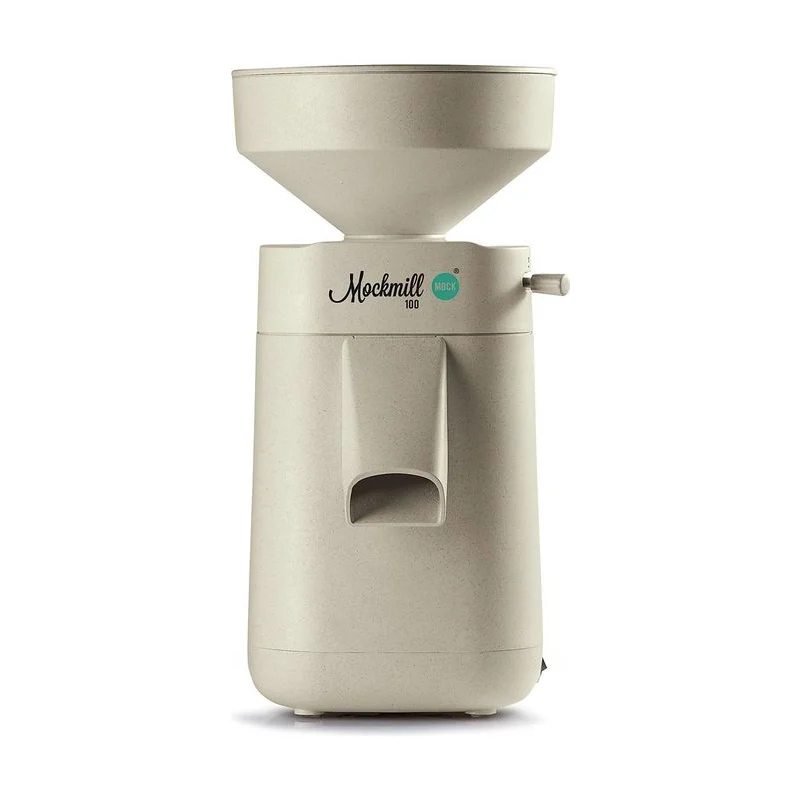
- Motor, Mockmill 200
- 600 W
- Motor, Mockmill 100
- 360 W
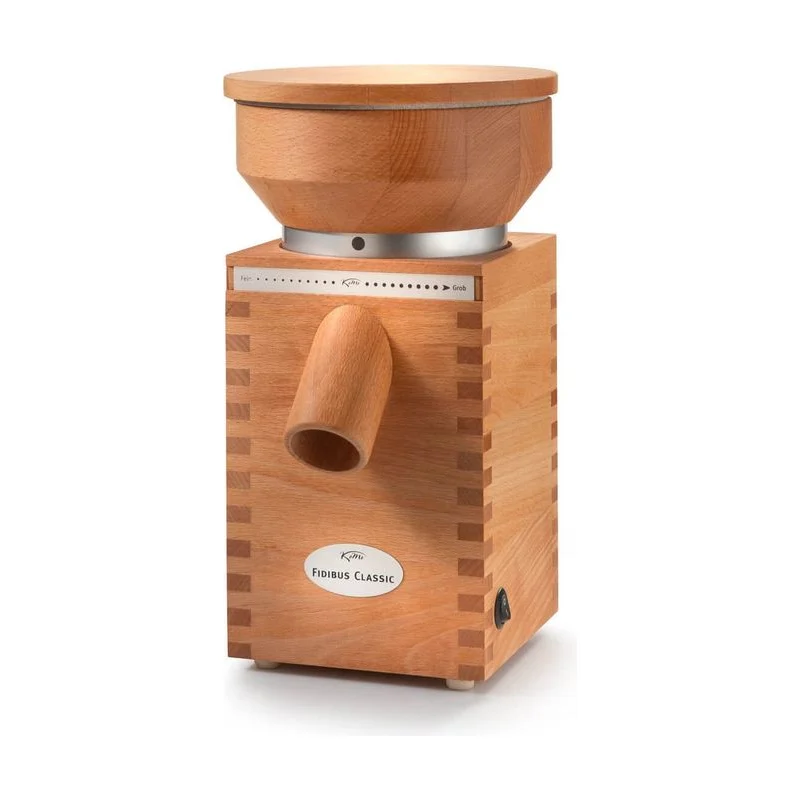
KoMo Fidibus Classic Grain Mill
- Motor, Mockmill 200
- 600 W
- Motor, KoMo Fidibus Classic
- 360 watts
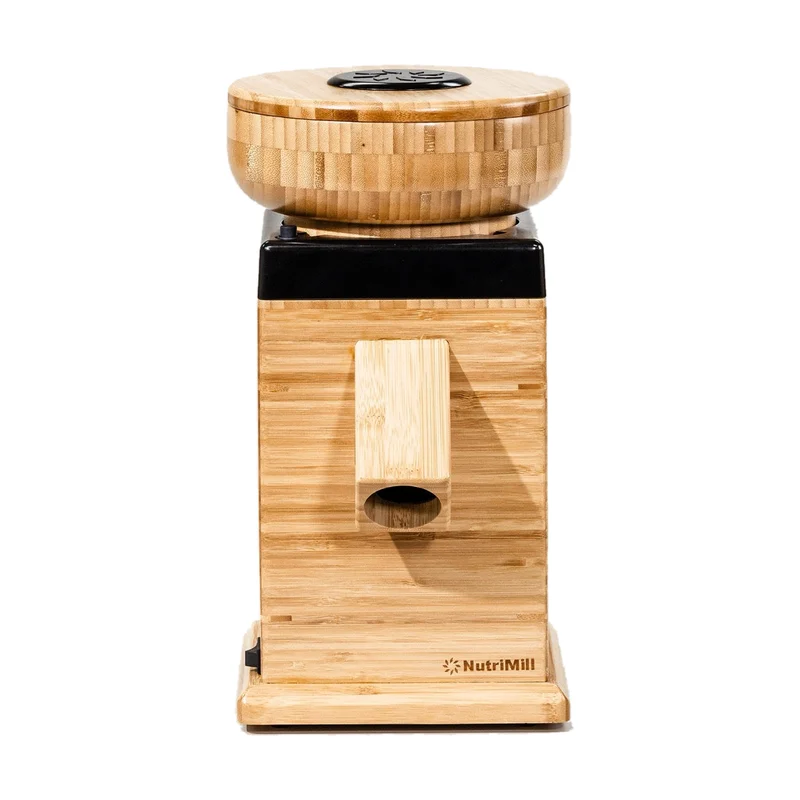
- Motor, Mockmill 200
- 600 W
- Motor, NutriMill Harvest
- 450 watts
The comparisons this mill appears in
Each of these decides this mill against one other model, on the rows both makers publish.
- Mockmill 100 vs Mockmill 200Mockmill 100 vs 200: Mockmill rates the 200 at 600 W and about 200 g of wheat a minute, the 100 at 360 W and 100 g. Hopper and warranty match.
The documents this page was read from
Prices and availability are on the seller’s site. Amazon links are affiliate links; we may earn a commission at no extra cost to you. Other seller links are unpaid.
- Publication
- By Millwright
- Source
- Manufacturer documentation
- Reviewed
- Documented
- 9 of 10 attributespublished by the makerCounts published attributes, not quality.