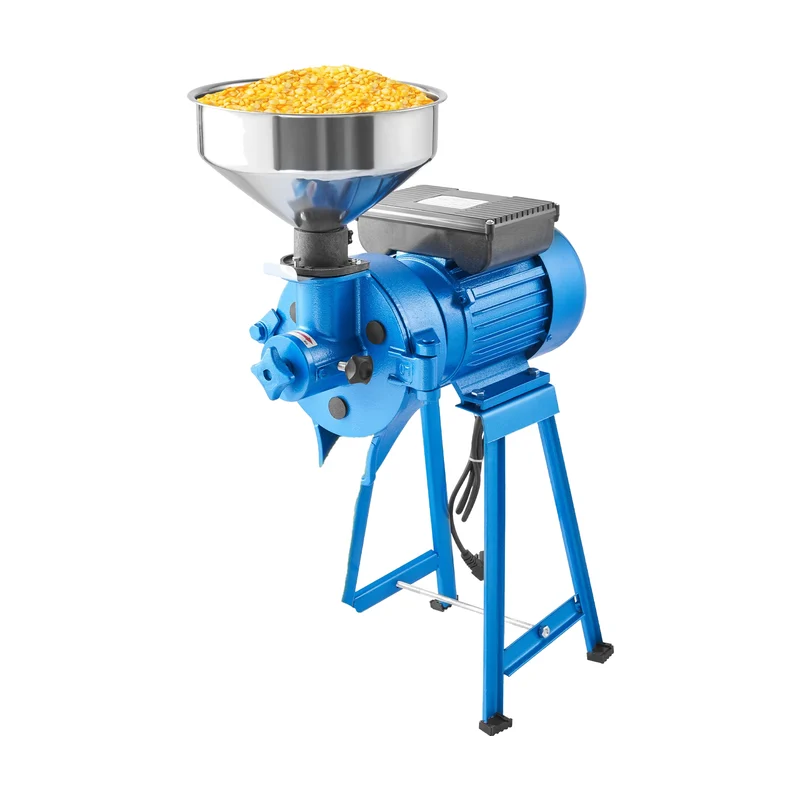
The VEVOR grain mill's specification block runs five rows and stops
What this section establishes
- Nine of the eighteen attributes confirmable for the MFS-140 come from the product listing, eight from the mirrored owner manual, and one from VEVOR’s site-wide return policy. The five-row specification block is a minority of its own product’s record.
- Eighteen MFS-140 attributes can be confirmed against a VEVOR document. Hopper capacity, flour container capacity, motor speed, fineness range and noise rating are not among them on any source read for this page.
VEVOR’s specification block for the MFS-140 carries five rows and stops. It states an item model number of MFS-140, a rated power of 1500 W, a voltage of 110 V, an item size of 9.4 x 11 x 27.6 in / 240 x 280 x 700 mm, and an item weight of 58.2 lb / 26.4 kg. Expanding the listing’s “View all specifications” control returns the same five rows and nothing further. Every other attribute on this page comes from somewhere other than that block: a VEVOR-branded owner manual that VEVOR itself does not publish, a site-wide return policy that never names this product, and VEVOR-authored answers posted in the listing’s question-and-answer section during 2023.
Eighteen attributes of this mill can be confirmed against a primary source. That is the entire record. It is a materially thinner one than the specification rows this site aligns model against model — hopper capacity, flour container capacity, a texture-adjustment range and a noise rating are all rows the comparison tables ask for, and for the MFS-140 every one of them is empty. The emptiness is not a research shortfall. Every source fetched for this page loaded, and a second verification pass re-read the product listing, the manual PDF and the return policy line by line before any figure was written down.
A buyer weighing this mill against a mill from an established brand is therefore not comparing two specification sheets. They are comparing one specification sheet against a five-row strip, a mirrored manual and a set of inferences. That asymmetry, rather than any single number, is what this page is about. How this site decides which rows may be filled and which have to stay blank is set out at how this site verifies a specification.
What follows reports what VEVOR’s own documents state, names the five places where those documents contradict each other, and stops where the evidence stops. Where a figure exists only as a manufacturer claim, it is labeled as a manufacturer claim rather than repeated as a measurement.
| Attribute | Published value | Document it was read from | Read from |
|---|---|---|---|
| Item model number | MFS-140 | MFS-140 product listing, specification block | vevor.com product page |
| Rated power | 1500 W | MFS-140 product listing, specification block | vevor.com product page |
| Voltage | 110 V | MFS-140 product listing, specification block | vevor.com product page |
| Item size | 9.4 x 11 x 27.6 in / 240 x 280 x 700 mm | MFS-140 product listing, specification block | vevor.com product page |
| Item weight | 58.2 lb / 26.4 kg | MFS-140 product listing, specification block | vevor.com product page |
| Hopper capacity | Not stated in any document read | Absent from the listing and from the owner manual | Not stated in any document read for this page. |
| Flour container capacity | Not stated in any document read | Absent from the listing and from the owner manual | Not stated in any document read for this page. |
| Motor speed | Not stated in any document read | Absent from the listing and from the owner manual | Not stated in any document read for this page. |
| Fineness range, in mesh or microns | Not stated in any document read | Absent from the listing and from the owner manual | Not stated in any document read for this page. |
| Noise rating, in decibels | Not stated in any document read | Absent from the listing and from the owner manual | Not stated in any document read for this page. |
The listing does not label which of the three item-size figures is width, depth or height, and does not state whether the item weight is net or shipping. Each blank row above was searched for on the product listing, including its expanded View all specifications block, and in the twelve-page owner manual. VEVOR’s support page for this SKU and its Manual Download Center were checked for a copy of the manual rather than row by row for these attributes; neither carries one.

VEVOR does not host the MFS-140 owner manual
The manual behind most of this page is a twelve-page PDF whose cover reads “GRINDER USER MANUAL MODEL: MFS-140". It is VEVOR’s own document — VEVOR branding, the address CustomerService@vevor.com, a pointer to vevor.com/support — and its model line matches the listing’s “Item Model Number MFS-140", so it genuinely belongs to this product. VEVOR does not host it.
The support page VEVOR maintains for this listing’s SKU, DDMPSGWY3000WPEK7V1, carries a heading for “Product Guides and Documents” with no downloadable manual beneath it. The single asset served there is a video titled “GM-002 Electric Grain Grinder: Demonstration of Usage” — a demonstration filed under a different model number than the one that same page is selling. VEVOR’s separate Manual Download Center, checked independently, lists no grain mill at all and no MFS-140 entry.
The copy read for this page came instead from device.report, a third-party mirror of manufacturer manuals. Eight of the eighteen confirmed attributes exist only in that PDF: the two ratings rows, the one-hour continuous working time, the 45 kg/hour capacity figure, the parts list that establishes the grinding mechanism, the safety clauses, the country of manufacture and the texture-adjustment procedure. For this mill the manual is not a supplement to the specification block. It is the majority of the record.
A mirrored PDF carries no revision date and no guarantee of currency. The honest instruction is the one the verification pass wrote down: re-confirm every manual-sourced figure on this page against the printed manual in the box before relying on it. That is an unusual sentence to have to write about a manufacturer’s own specifications, and it follows directly from VEVOR declining to publish the document itself.
The distinction is not pedantic. A manufacturer-hosted manual is a document the manufacturer can be held to, is versioned by the manufacturer, and can be re-read a year later at the same address. A mirrored copy is a snapshot taken by a third party at an unknown date. Every figure below that is sourced to the manual inherits that weaker footing, and this page marks which figures those are rather than blending them into the listing’s specifications as though the two carried equal weight.
The MFS-140 mills between plates, not in an impact chamber
The manual’s PRODUCT STRUCTURE parts list settles the mechanism. Item 10 is a “Stationary grinding plate” and item 14 a “Moving grinding plate”, and each carries the quantity “Dry grinding plate*1 Wet grinding plate*1" — one fixed plate and one turning plate, in a dry-grinding version and a wet-grinding version, so two plate pairs ship with the mill.
Two mechanisms dominate this category and they behave differently. A burr surface, whether stone or steel, mills by drawing grain through a controlled gap between one fixed face and one rotating face, so texture follows the gap. An impact chamber mills by throwing grain into a chamber of spinning fins that shatter it, so texture follows fin speed rather than a gap. The MFS-140's parts list places it in the first family, and the listing agrees: “2 In 1 Wet & Dry Grinding: Steel milling disc for dry grinding; Sand milling disc for wet grinding.” What that choice of mechanism governs — heat, the granularity of texture control, and what each type excludes — is set out at Impact vs stone burr grain mills.
The plate material is never given a specification. The listing calls the dry plate a “Steel milling disc” and the wet plate a “Sand milling disc”. A VEVOR answer in the same listing’s question-and-answer section calls the grinding surface a “stone burr”. The manual calls both parts “grinding plates” and names no material for either. That is three descriptions of one component, published by one manufacturer across two documents. “Sand” is VEVOR’s own word for the wet disc and this page does not translate it into “stone” — the only place the word stone appears in VEVOR’s material for this model is that single answer, and its subject is grinding sugar.
The wet plate is the more unusual half of the arrangement. VEVOR states that the mill permits wet grinding of soaked soybeans and soaked rice into a pulp, which is a different operation from milling dry grain into flour and uses the second plate pair. A buyer whose interest is bread flour will use one pair and store the other; a buyer whose interest is soy milk will do the reverse. VEVOR does not state a changeover procedure, a fastening torque, or how the two pairs are told apart by sight once they are out of the box.
One VEVOR bullet contradicts the plate mechanism outright. Under a heading reading “Super Smash Function”, the same product listing states “A sharp blade can crush all kinds of food into fine powder.” A blade is not a plate, and no item in the manual’s parts list is called a blade. Both statements are published by VEVOR about the same SKU, and they are reported rather than reconciled.
The MFS-140's texture control carries no numbered settings and no published mesh range
What this section establishes
- Texture on the MFS-140 is set by hand at an adjusting handle and regulating screw — anti-clockwise for thick, clockwise for thin — with no numbered settings, no detent positions and no printed scale.
- VEVOR publishes no mesh or micron range for the MFS-140. The only fineness figure in its material for this model is a 2023 answer stating the mill can only reach 80 mesh on dry corn.
- Neither of the two performance figures VEVOR publishes — 45 kg/hour or more, and 80 mesh on dry corn — is tied to a position of the adjusting handle, so the two cannot be read against each other.
The MFS-140 adjusts texture mechanically at the plates. The manual’s OPERATING INSTRUCTION step 5 states “Turn the adjusting handle to adjust the thickness of the ground ingredients”, and the parts list names item 1 "Adjusting handle” and item 2 "Regulating screw”. The direction of travel comes from the product listing: “For thick grinding, rotate the adjusting screw anti-clockwise, and vice versa for thin grinding.”
One precision note about that mechanism. The manual never states that the handle changes the spacing between the two plates; it states only that the handle changes the thickness of the output. That the control works by moving one plate relative to the other follows from the parts list — a regulating screw acting on a stationary and a moving plate — rather than from any printed sentence. It is a sound reading of the evidence and it is flagged here as a reading rather than a quotation.
The adjustment carries no numbers. VEVOR publishes no numbered settings, no detent positions, no printed scale and no fineness range in mesh or microns for the MFS-140. The single fineness figure anywhere in VEVOR’s material for this model is corn-specific and lives in a 2023 answer on the listing: “This machine can grind dry corn into corn flour, but it can only reach 80 mesh.” No equivalent figure exists for wheat, for rye, for spices, or for either of the wet-grinding applications VEVOR names.
The consequence is practical rather than theoretical. A texture control without a scale cannot be recorded and returned to, cannot be handed to a second person in the household as an instruction, and cannot be compared against another mill’s published range. Every setting is found by test milling and remembered by feel, and every change of material starts that search again. For a baker who wants a coarse cracked grain one day and a fine pastry flour the next, the absence of an index is a workflow cost rather than a quality claim.
It also makes one specific comparison impossible. Two mills cannot be ranked on fineness unless both publish a range, and the MFS-140 publishes none. The corn answer quoted above is a ceiling, not a range: it states how fine dry corn gets and states nothing about how coarse, nothing about the plate setting or the method behind the number, and nothing about any other material. A ceiling on one grain cannot be stretched into a range across all of them, and this page will not manufacture one by extrapolating from it. A reader who wants that comparison has to begin from the other mill’s own documentation rather than from anything published here; this site keeps its separate record of one such mill at Mockmill 100 Stone Grain Mill.
The gap between the two performance numbers VEVOR does publish makes the same point from the other direction. The manual states a capacity of 45 kg/hour or more and does not state the plate setting that figure was taken at. The corn answer states an 80 mesh ceiling and does not state the throughput at which corn reaches it. Neither figure is tied to a position of the adjusting handle, so the two numbers cannot be read against each other: a reader cannot tell whether the stated rate describes a coarse output or the finest the plates will hold, and cannot tell what the corn ceiling cost in rate. Two performance figures published by one manufacturer about one machine, and no stated setting joining them.
The wet plate pair is undocumented in this respect entirely. VEVOR names a steel disc for dry grinding and a sand disc for wet grinding, and states no texture behavior, no thickness range and no adjustment guidance specific to the sand disc. The adjusting handle is described once, in a manual that never says which plate pair is fitted when it is turned. What the control does to soaked soybeans or soaked rice — the two wet applications VEVOR advertises by name — has no published answer on any source read for this page.
1500 W, one hour continuous, and the MFS-140 installation clauses
What this section establishes
- The MFS-140 owner manual rates two regional builds at 1500 W — 110V/60Hz and 230V/50Hz — and the US listing states 110 V only.
- Continuous working time is one hour on both ratings rows, and no cool-down interval is published anywhere in the manual.
- Capacity is stated as 45 kg/hour or more on both rows, with no material, no moisture content and no plate setting named behind the figure.
The MFS-140 draws 1500 W. The listing states “Rated Power 1500W” twice, in the specification strip and again in the feature copy, and the manual’s TECHNICAL PARAMETER table confirms it independently for both regional builds: one row reads “MFS-140 | 110V/60Hz | 1500W | 1hour” and a second reads “MFS-140 | 230V/50Hz | 1500W | 1hour”, with a capacity of 45 kg/hour or more on each. The US listing states 110 V only. Whether the 230V/50Hz build named in the manual is ever the unit shipped from that listing is not stated on any source read for this page.
Continuous working time is one hour on both rows. The manual states how long the mill may run and does not state how long it must rest afterward. There is no cool-down interval published, and none is invented here. A buyer planning to mill a large batch has an upper bound on a single run and no guidance on the duty cycle around it, which is a meaningful omission for a machine whose stated appeal is bulk throughput.
Throughput is a manufacturer figure and is reported as one. The manual’s capacity column states 45 kg/hour or more for both voltage rows. VEVOR does not state which material produced that figure, at what moisture content, or at what plate gap, and does not state whether wet grinding and dry grinding reach it equally. A floor claim with no test conditions attached is a different object from a measured rate, and this page treats it as the former. Note also that the figure does not change between the 110 V and the 230 V rows, which is either a genuine finding about the motor or an artifact of a table filled in once and copied down.
Motor speed is not published for the MFS-140 in either document. The installation clauses that are published are specific and worth reading before buying. The manual requires indoor use only — “7.DO NOT use outdoors, this product is intended for INDOOR USE ONLY” — excludes extension cords — “9.DO NOT USE WITH EXTENSION CORD. Always plug directly into a grounded wall receptacle” — requires a three-prong grounded plug with the grounding prong intact, excludes submerging the grinder in water or other liquids, and requires the operator to wear ear protectors during use.
Siting is constrained by mass. VEVOR states an item weight of 58.2 lb / 26.4 kg and an item size of 9.4 x 11 x 27.6 in / 240 x 280 x 700 mm. The listing does not label which of those three figures is width, depth or height, and does not state whether the weight is net or shipping. A buyer measuring a shelf knows the largest published dimension is 27.6 in / 700 mm without knowing which axis it runs along, and a buyer planning where the mill will live should assume it is sited once rather than lifted in and out of a cupboard between sessions.
| MODEL | RATINGS | Unlabelled column in the manual | Continuous working time | Capacity | Read from |
|---|---|---|---|---|---|
| MFS-140 | 110V/60Hz | 1500W | 1hour | ≥45kg/hour | Owner manual (PDF) |
| MFS-140 | 230V/50Hz | 1500W | 1hour | ≥45kg/hour | Owner manual (PDF) |
The capacity column does not change between the two voltage rows. The manual states no rest interval after the one hour, and does not state whether wet grinding and dry grinding reach the capacity figure equally. Whether the 230V/50Hz build is ever the unit shipped from the US listing is not stated on any source read for this page.
What VEVOR permits, what it excludes, and what it merely discourages
VEVOR publishes no consolidated do-not-mill list for the MFS-140. What exists is a permitted list in the listing’s feature bullets, two safety clauses in the manual, and two VEVOR-authored answers in the listing’s question-and-answer section, dated 2023 and attributed on the page to VEVOR. Those four fragments are the entire ingredient scope, and they divide into three tiers rather than the usual two.
The mill excludes four things outright, three of them from the manual. It excludes outdoor operation, excludes submerging the grinder in water or other liquids, and excludes attachments or parts not specifically recommended or sold by VEVOR — clause 17 states that using them “will void the warranty and may cause fire, electric shock or injury”. The fourth exclusion comes from a Spanish-language answer on the listing: asked whether the mill can grind cooked corn to make masa, VEVOR answered “Solo puede moler maíz seco”, which is to say it can only grind dry corn.
Granulated sugar sits in a third tier and is not a prohibition. VEVOR’s answer states that sugar can be ground into powder but “should not be ground for too long”, because friction heat over an uncertain grinding time makes the sugar melt slightly and stick to the burr, and it concludes “So it is not recommended”. That is a conditional discouragement with a stated mechanism, and this page does not upgrade it into a ban. A reader who wants powdered sugar occasionally is looking at a caution about run length, not a forbidden material.
Three questions a buyer would reasonably ask go unanswered. No source states a maximum moisture content, no source states a maximum hardness, and no source states whether oily seeds are permitted at all. The nearest thing to an answer is a non-answer about malted brewing grain: “What is the moisture content of home-brewing grains? Dry ones can be ground dry, and wet ones can be ground with water. The specific effect requires detailed analysis.” A home brewer reading that has learned nothing about whether the mill suits their grain bill.
The shape of this evidence deserves a comment of its own. A permitted list assembled from marketing bullets is a sales document; an exclusion list assembled from safety clauses is a liability document. Neither is an application guide, and the gap between the two is exactly where the unanswered questions sit. An ingredient a manufacturer neither advertises nor forbids is not thereby approved, and the MFS-140's documentation leaves a wide band of common milling materials in precisely that state.
The mill permits the following, quoted from the listing’s feature bullets and from VEVOR’s own answers on the same page:
- Grains: soy, corn, barley, wheat, oats, rye, peas and coffee beans.
- Spices: fennel, pepper, cinnamon and rosemary.
- Herbs, named as a category with no examples given.
- Wet grinding of soaked soybeans and soaked rice into a pulp, which VEVOR describes as usable for soy milk and rice cakes.
- Dry corn, which a VEVOR answer states reaches 80 mesh and no finer.
- Thickness-adjustable output for “spice, corn, coffee bean, cereal, wheat, and nut”.
Five places where VEVOR's own documents disagree
What this section establishes
- VEVOR’s own documents disagree in five places about the MFS-140: supply voltage, grinding mechanism, plate material, noise, and the rated power set against VEVOR’s own SKU string.
- The voltage conflict is internal to one document. The manual’s ratings table states 110V/60Hz, while safety clause 20 of the same manual states the plug should be connected directly to a grounded 120V(US)/230V(EC) wall outlet.
- No decibel figure exists on either side of the noise conflict, so nothing published arbitrates between the manual’s ear-protector warning and the listing’s claim that the mill does not create noise.
Conflicts between a manufacturer’s own sources are reported on this site rather than resolved, because the disagreement is itself information a buyer cannot get from either document alone. The MFS-140 carries five — on supply voltage, on the grinding mechanism, on the plate material, on noise, and between the stated power and VEVOR’s own SKU string. Five contradictions against a record of eighteen confirmed attributes is a high ratio, and it is the clearest quantitative statement this page can make about documentation quality.
Not all five carry the same weight. The noise conflict is the one most likely to change a purchase decision: a mill marketed as making no noise and manualed with a hearing-protection warning has no published decibel figure to arbitrate between the two positions, and both cannot be operative guidance. The hearing-protection instruction is the stronger signal of the pair, because a manufacturer writes one against its own marketing interest and against its own liability exposure.
The voltage conflict comes second, and it is a documentation defect rather than a hazard on its face. Nominal 110 V and 120 V descriptions of the same North American supply are used interchangeably across appliance literature, so the discrepancy is unlikely to matter at the outlet. It matters as evidence: a twelve-page manual that describes its own supply voltage two different ways has not been proofread against its own ratings table, which is a reason to treat the rest of that manual’s figures as reported rather than certified.
The mechanism conflict matters least for operation and most for trust. A reader can settle it unaided — the parts list wins, because a parts list is manufacturing documentation and a marketing bullet is not — but the fact that VEVOR published a blade sentence about a plate mill on its own product page says something about how that page was assembled. The plate-material conflict sits in the same category, with the added cost that plate material is a genuine buying criterion nobody can evaluate from what VEVOR has published. The SKU conflict is the one to act on procedurally rather than analytically: checking the item model number on the live listing costs seconds.
The five conflicts in full, each with both of the sources that disagree:
- Supply voltage. The listing’s specification block states “Voltage 110V” and the manual’s ratings table states “110V/60Hz”, but safety clause 20 of that same manual states the plug should be connected directly to a grounded 120V(US)/230V(EC) wall outlet. VEVOR’s own manual gives the US supply as 120 V in its safety text and 110 V in its ratings table.
- Mechanism. The listing states “Steel milling disc for dry grinding; Sand milling disc for wet grinding”, and the manual’s parts list names a stationary and a moving grinding plate. The same listing also states, under “Super Smash Function”, that “A sharp blade can crush all kinds of food into fine powder”. Plates and a blade describe different machines.
- Plate material. The listing says steel for the dry disc and sand for the wet disc, a VEVOR answer on the same listing says “stone burr”, and the manual names no material for either plate. Three descriptions, no specification.
- Noise. The manual states “Warning- Be sure to wear ear protectors when using this product.” The listing, under a heading reading “Quieter Operation to Support Healthy Environment”, states that the mill’s powerful motor and sturdy construction do not create noise, and that the work is done in a noiseless way. VEVOR’s own on-page review summary meanwhile records “minor concerns about dust and noise”. No decibel figure is published anywhere.
- Power against the SKU string. The specification block states 1500 W, while VEVOR’s SKU for that same listing is DDMPSGWY3000WPEK7V1 — a string containing “3000W” — and the support page for that SKU serves a demonstration video for model GM-002. The SKU string is not a power rating and should not be read as one.
VEVOR's GM-002 listing publishes the specification rows the MFS-140 does not
VEVOR sells a near-identically titled electric grain mill under a different model number, and that sibling listing’s specification block is substantially fuller than the MFS-140's. Under SKU DDMPSGWYMJLJOM53QV1, VEVOR states an item model number of GM-002 and publishes several rows the MFS-140 listing does not carry at all.
None of the GM-002 figures belong to the MFS-140, and none of them are used anywhere else on this page. They are recorded for one reason: they demonstrate that VEVOR is capable of publishing motor speed, hopper material, hopper diameter and a fineness range for an electric grain mill, and does not do so for this model. The gap in the MFS-140's documentation is editorial rather than technical. Nobody at VEVOR lacks the means to measure a hopper.
The sibling listing also creates a straightforward purchasing hazard. Two VEVOR listings in the same category carry titles that differ mainly in a wattage figure, the support page for the 1500 W listing serves a video for model GM-002, and the SKU string of the 1500 W listing itself contains the characters “3000W”. A shopper matching on title alone can order a different machine than the one they researched, with a different weight, a different footprint and a different plate arrangement.
The instruction that follows from the evidence is unambiguous. Re-verify the item model number in the specification block of the live listing before ordering, because everything on this page describes MFS-140 and nothing else. That check takes seconds and is the only reliable identity test available, since titles, category placement and even SKU strings have all proved unreliable across these two listings.
Variant churn also caps how long any page about a budget listing stays accurate. A model number that persists across years of a catalog can be researched once and trusted later. A listing that can be replaced by a differently specified sibling under a near-identical title has to be re-checked at the moment of purchase, and that re-check is work the reader has to do personally. It is a real if unglamorous cost of buying at this end of the market, and it never appears in a specification table.
The rows VEVOR publishes for GM-002, and does not publish for MFS-140:
- Model GM-002, with a stated power of 3000 W.
- Motor speed 1400 r/min — a row entirely absent from the MFS-140 listing.
- Hopper material 201 stainless steel and hopper diameter 10 in / 25.5 cm — the MFS-140 states neither.
- Grinding speed 110 lb / 50 kg per hour.
- Grinding fineness 30-300 mesh — against which the MFS-140 publishes no mesh range at all.
- Continuous operation time 1 hour, product weight 45.4 lb / 20.6 kg, and product size 19.88 x 9.84 x 27.56 in / 505 x 250 x 700 mm.
| Specification row | Published value | Model, and the document the value was read from | Read from |
|---|---|---|---|
| Item model number | GM-002 | GM-002 sibling listing, specification block | vevor.com product page |
| Item model number | MFS-140 | MFS-140 listing, specification block | vevor.com product page |
| Power | 3000 W | GM-002 sibling listing, specification block | vevor.com product page |
| Power | 1500 W | MFS-140 listing, specification block | vevor.com product page |
| Motor speed | 1400 r/min | GM-002 sibling listing, specification block | vevor.com product page |
| Motor speed | Not stated in any document read | MFS-140: absent from the listing and from the owner manual | Not stated in any document read for this page. |
| Hopper material | 201 stainless steel | GM-002 sibling listing, specification block | vevor.com product page |
| Hopper material | Stainless steel funnel, with no grade named | MFS-140 listing, Durable Material feature bullet | vevor.com product page |
| Hopper diameter | 10 in / 25.5 cm | GM-002 sibling listing, specification block | vevor.com product page |
| Hopper diameter | Not stated in any document read | MFS-140: absent from the listing and from the owner manual | Not stated in any document read for this page. |
| Grinding speed | 110 lb / 50 kg per hour | GM-002 sibling listing, specification block | vevor.com product page |
| Grinding speed | ≥45kg/hour | MFS-140 owner manual, TECHNICAL PARAMETER table | Owner manual (PDF) |
| Grinding fineness | 30-300 mesh | GM-002 sibling listing, specification block | vevor.com product page |
| Grinding fineness | No range published; 80 mesh on dry corn is the only figure VEVOR gives | MFS-140 listing, VEVOR answer in the 2023 question-and-answer section | vevor.com product page |
| Continuous operation time | 1 hour | GM-002 sibling listing, specification block | vevor.com product page |
| Continuous operation time | 1hour | MFS-140 owner manual, TECHNICAL PARAMETER table | Owner manual (PDF) |
| Product weight | 45.4 lb / 20.6 kg | GM-002 sibling listing, specification block | vevor.com product page |
| Product weight | 58.2 lb / 26.4 kg | MFS-140 listing, specification block | vevor.com product page |
| Product size | 19.88 x 9.84 x 27.56 in / 505 x 250 x 700 mm | GM-002 sibling listing, specification block | vevor.com product page |
| Product size | 9.4 x 11 x 27.6 in / 240 x 280 x 700 mm | MFS-140 listing, specification block | vevor.com product page |
Every row above names the one document its value was read from, and the two rows carrying no document record an attribute VEVOR publishes for GM-002 and not for MFS-140. No GM-002 figure is a specification of the MFS-140, and none appears anywhere else on this page. The GM-002 listing carries SKU DDMPSGWYMJLJOM53QV1. Re-verify the item model number on the live listing before ordering.
Thirteen MFS-140 attributes a buyer cannot verify before the box arrives
Two absences change how the mill is used, and they are worth separating from the rest. Hopper capacity is the first. It determines how often a milling session is interrupted to refill, and it is one of the rows this site’s comparison tables align across every model. For the MFS-140 the row cannot be filled at all, which means a reader cannot work out whether a five-pound batch of wheat is one loading or four. The stated throughput of 45 kg/hour or more is close to useless as a planning figure without it, because an operator standing over a small hopper is the actual rate limit rather than the motor.
Flour container capacity is the second, and it is worse than merely unpublished. The manual’s operating instruction reads “3. Containers placed at the outlet;” — phrasing that reads as though the operator supplies the container, which would mean the attribute does not exist for this product rather than existing and going unstated. That is a different kind of blank. A mill supplied without a catch container needs a bowl or a bin chosen to fit under the outlet.
Neither question can be settled before the box is open, and neither can be settled by inference from the figures VEVOR does publish. External dimensions do not disclose an internal volume, and this page will not derive a hopper capacity from a 9.4 x 11 x 27.6 in overall size. A reader who needs those numbers before committing has two routes: ask VEVOR’s customer service, whose address is printed in the manual, or read the printed manual after delivery and return the unit inside the policy window if the answer is unacceptable.
The attributes below have no published value anywhere in VEVOR’s material for the MFS-140. Each was searched for on the product listing, in the twelve-page manual, and where relevant on VEVOR’s support page and Manual Download Center. They are listed because a buyer will want them and will not find them, not because they are exotic requests:
- Hopper capacity. The manual’s parts list names a “Hopper” and a “Hopper base” and gives no volume or weight, and the listing’s specification block does not carry the row in either its collapsed or its expanded form.
- Flour container capacity, and whether a container ships at all. The manual’s phrasing puts the container on the user, and no capacity figure exists on any source.
- Fineness range. No mesh or micron range is published for the MFS-140. The only figure anywhere is corn-specific and states the mill can only reach 80 mesh on dry corn.
- Motor speed. No r/min figure appears for the MFS-140 in either document, though VEVOR publishes one for its GM-002 sibling.
- Noise level. No decibel figure, set against a manual that requires ear protectors and a listing that claims the mill makes no noise.
- Plate material. Steel, sand and stone burr are all used by VEVOR to describe the grinding surfaces; no grade, hardness or composition is specified for either plate.
- Metal specification of the body. The funnel is stated to be stainless steel and the body solid iron, with no grade named for the steel and no gauge or casting specification for the iron.
- Dimension axis order. The figures 9.4, 11 and 27.6 in are published without labels for width, depth and height.
- Net against shipping weight. 58.2 lb / 26.4 kg is published without stating which of the two it is.
- Duty cycle. One hour of continuous running is published; the rest interval required after it is not.
- Material limits. No maximum moisture content, no hardness limit, and no statement on whether oily seeds are permitted.
- Which electrical build ships. The manual documents both a 110V/60Hz and a 230V/50Hz MFS-140; the US listing states 110 V and does not state that the 230 V build is excluded from it.
- Replacement plate availability. No replacement-parts listing or part number for the grinding plates appears on any source read for this page, against a manual clause that voids the warranty for non-VEVOR parts.
VEVOR's 12-month warranty comes from a policy page, not from the MFS-140 listing
The MFS-140 product listing states no warranty term. The only occurrence of the word warranty on that page belongs to a paid third-party protection plan offered alongside the item, which is a purchase rather than a manufacturer commitment. The warranty that applies comes from VEVOR’s site-wide return and refund policy, which states that “all our products come backed by a comprehensive standard 12-month manufacturer’s warranty”, and that under the standard 12-month warranty VEVOR provides “free repair services for any manufacturing defect, mechanical failure, or similar issue that occurs during the warranty period”.
The same policy page carries a 90-day quality-assurance window, and it is narrower than it first reads. The 90 days covers “returns or exchanges within 90 days of delivery for items with manufacturing defects, mechanical failures, or similar issues” — it is conditional on a defect. The general return window stated on that page is 30 days, for most items in their original condition. A buyer who reads 90 days as a blanket trial period has read it wrong, and the distinction matters precisely because so many of this mill’s attributes can only be checked after delivery.
One manual clause interacts with the warranty directly. Clause 17 states that attachments or parts not specifically recommended or sold by VEVOR “will void the warranty and may cause fire, electric shock or injury”. Grinding plates are consumable by nature, so that clause turns the availability of VEVOR-sourced replacement plates into a live question rather than a hypothetical one, and no replacement-parts listing or part number appears on any source read for this page.
Support documentation is thin in the same direction as everything else. The SKU’s support page offers a contact route and a video for a different model, no manual and no parts list. A buyer whose plates wear or whose regulating screw binds has VEVOR’s customer service address and the mirrored PDF’s parts diagram, and no manufacturer-hosted document to point at when asking for a specific component by name and item number.
What this analysis does not establish about the VEVOR MFS-140
Nothing on this page comes from handling the mill. No unit was ordered, unboxed, run or measured. Every figure here is a published specification or a quoted sentence from VEVOR’s product listing, VEVOR’s owner manual, or VEVOR’s return and refund policy, and the page states which of the three each figure came from.
The analysis therefore establishes nothing about performance. It does not establish how fine the MFS-140 mills wheat, because no wheat fineness figure is published. It does not establish how loud the mill is, because no decibel figure exists on either side of a contradiction VEVOR published about itself. It does not establish flour temperature, milling rate under any real load, nutrient retention, or whether the stated capacity of 45 kg/hour or more holds for anything beyond whatever material VEVOR measured it on.
It establishes nothing about durability or failure rate. The 1500 W rating, the one-hour continuous working time and the solid iron body are published claims about design, not evidence about service life. No source read for this page states a plate replacement interval, a mean time to failure, or an expected lifespan, and this page does not estimate one from the materials named.
It does not establish that the mirrored manual is current. The PDF is VEVOR’s own document and its model line matches the listing, but it carries no revision date and VEVOR publishes no copy against which to check it. Should the manual in the box differ from the one quoted here, the printed manual governs and this page is the document that is wrong.
It does not establish anything about the wet-grinding application beyond the fact that VEVOR advertises it. Soaked soybeans and soaked rice are named on the listing, the sand disc is named as the tool for them, and no yield, soaking time or water ratio is published for either on the sources read for this page.
Finally, it does not establish that the listing a reader opens today is the listing described here. The MFS-140 record was read on 2026-09-05, and a near-identically titled VEVOR mill under model GM-002 already occupies the same category with a different specification set. The item model number is the only reliable identity check, and performing it is the one step in this analysis that a reader has to carry out personally.
How much grain does the VEVOR MFS-140 hopper hold?
VEVOR does not state a hopper capacity for the MFS-140, in volume or in weight. The manual’s parts list names a “Hopper” and a “Hopper base” as components without attaching a figure to either, and the listing’s specification block carries five rows — item model number, rated power, voltage, item size and item weight — with no capacity row before or after expanding “View all specifications”.
Two places are worth checking that this page cannot check on a reader’s behalf. The printed manual shipped in the box may carry a figure that the mirrored PDF revision does not, and VEVOR’s customer service address, printed in the manual, can be asked directly before ordering. A figure obtained either way is worth more than an estimate derived from the mill’s external dimensions, which is why no estimate is offered here.
Is the VEVOR MFS-140 a burr mill or an impact mill?
The parts list makes it a plate mill, which places it in the burr family rather than the impact family. The manual names one “Stationary grinding plate” and one “Moving grinding plate”, each supplied in a dry version and a wet version, and the listing describes “Steel milling disc for dry grinding; Sand milling disc for wet grinding”. Grain passes through an adjustable gap between two faces rather than into a chamber of spinning fins.
VEVOR’s own marketing copy muddies this, and the contradiction is VEVOR’s rather than this page’s. The same listing carries a “Super Smash Function” bullet stating that “A sharp blade can crush all kinds of food into fine powder”, and no blade appears anywhere in the manual’s parts list. Treat the parts list as the mechanical description and the blade sentence as copy that does not match the machine it is selling.
How fine will the VEVOR MFS-140 grind wheat flour?
No fineness figure is published for wheat. VEVOR states no mesh range, no micron range and no numbered settings for the MFS-140. The adjusting handle and regulating screw change output thickness — anti-clockwise for thick, clockwise for thin, per the listing — but the control carries no scale, so there is nothing to quote as a finest or a coarsest setting.
The only fineness number VEVOR publishes for this model anywhere is corn-specific: a 2023 answer on the listing states “This machine can grind dry corn into corn flour, but it can only reach 80 mesh.” That figure is about dry corn, and this page does not extend it to wheat. VEVOR does publish a 30-300 mesh range for its GM-002 mill, but GM-002 is a different model number with a different power rating, a different weight and different dimensions, and its figures do not transfer to this one.
How loud is the VEVOR MFS-140 grain mill?
No decibel figure is published, and VEVOR’s two documents point in opposite directions. The manual carries the instruction “Warning- Be sure to wear ear protectors when using this product.” The product listing, under a heading reading “Quieter Operation to Support Healthy Environment”, states that the motor and construction do not create noise and that the work is done in a noiseless way.
A hearing-protection warning is the stronger of the two signals, because a manufacturer writes one against its own marketing interest. VEVOR’s own on-page review summary also records “minor concerns about dust and noise”. This page reports both positions and asserts neither as a measured noise level, because neither document contains one. A reader who needs a number should plan on hearing protection being available and treat the noiseless claim as unquantified marketing copy.
What warranty does VEVOR give on this grain mill?
Twelve months, from VEVOR’s site-wide policy rather than from the product listing. The return and refund page states that “all our products come backed by a comprehensive standard 12-month manufacturer’s warranty”, covering “free repair services for any manufacturing defect, mechanical failure, or similar issue that occurs during the warranty period”. The MFS-140 listing itself states no warranty term, and the only warranty-adjacent offer on it is a paid third-party protection plan.
Two qualifications matter. The 90-day quality-assurance window on the same policy page applies to items with manufacturing defects or mechanical failures rather than to a change of mind, and the general return window stated there is 30 days for most items in their original condition. And manual clause 17 states that attachments or parts not specifically recommended or sold by VEVOR “will void the warranty”, which is worth knowing before sourcing replacement grinding plates from a third party.
Every published figure, with the document it came from
Every row this maker publishes for this mill, printed as its own document prints it, with the document named beside it.
| Attribute | As published | Read from |
|---|---|---|
| Milling mechanism | One stationary and one moving grinding plate, supplied as a dry-grinding pair and a wet-grinding pair | Owner manual (PDF) |
| Motor | 1500 W | vevor.com product page |
| Voltage | 110 V (US listing); the manual rates both a 110V/60Hz and a 230V/50Hz build at 1500 W | vevor.com product page |
| Texture adjustment | Hand adjustment via adjusting handle and regulating screw; anti-clockwise coarser, clockwise finer; no numbered settings published | Owner manual (PDF) |
| Throughput | 45 kg/hour or more (manufacturer manual figure, no test conditions stated) | Owner manual (PDF) |
| Continuous working time | 1 hour (no cool-down interval published) | Owner manual (PDF) |
| Noise rating | Not published; the manual instructs the operator to wear ear protectors | Owner manual (PDF) |
| Dimensions | 9.4 x 11 x 27.6 in / 240 x 280 x 700 mm (axis order not labeled) | vevor.com product page |
| Weight | 58.2 lb / 26.4 kg (net or shipping not stated) | vevor.com product page |
| Housing | Solid iron body with stainless steel funnel; no grade or gauge published for either | vevor.com product page |
| Warranty | 12-month standard manufacturer's warranty, from VEVOR's site-wide policy rather than the product listing | vevor.com product page |
| Country of manufacture | China | Owner manual (PDF) |
This mill against the other eight
The catalogue reduced to five columns and grouped by the mechanism each maker's own documents describe. This mill keeps its place in the order.
| Mill | Mechanism | Motor | Hopper | Warranty |
|---|---|---|---|---|
| Impact — the grain is shattered against steel heads, there is no gap to setTwo mills · 1,200 to 1,250 W | ||||
| NutriMill Classic Grain MillRead from NutriMill product page · Owner manual (PDF)View NutriMill Classic on Amazon | High-speed impact chamber with stainless steel Microburst milling heads | 1200 W, 10 amps | 12 cups 13 cups | 5 years parts and plastics; limited lifetime on motor and milling heads; original noncommercial purchaser only |
| WonderMill Electric Grain MillRead from Pleasant Hill Grain dealer specifications · WonderMill product page · Owner manual (PDF)View WonderMill Electric at Unsifted | Impact; two fin-studded stainless steel plates, one rotating | 1250 W LG Electronics motor (manufacturer states) | 8 cups (wheat) | Lifetime on milling heads to the original owner; six years on all other parts |
| Stone burr — the grain is ground between two corundum discs you can moveFour mills · 360 to 600 W | ||||
| Mockmill 100 Stone Grain MillRead from Mockmill product pageView Mockmill 100 at Mockmill USA | Corundum ceramic grinding stones | 360 W | 1,100 g | 2 lbs 7 oz (wheat) | 6 years, non-commercial use |
| KoMo Fidibus Classic Grain MillRead from KoMo product pageView KoMo Fidibus Classic at Pleasant Hill Grain | Stone burr; infinitely adjustable, self-sharpening, made of premium corundum ceramic | 360 watts | Approx. 1,000 g of wheat | 12 years on household grain mills |
| Mockmill 200 Stone Grain MillRead from Mockmill product pageView Mockmill 200 at Mockmill USA | Corundum ceramic grinding stones | 600 W | 1,100 g | 2 lbs 7 oz (wheat) | 6-year warranty for non-commercial use |
| NutriMill Harvest Grain MillRead from NutriMill product page · NutriMill technical illustrationView NutriMill Harvest on Amazon | Corundum stone burrs, upper and lower | 450 watts | 5 cups | 5 years against manufacturing defects in materials and workmanship |
| Steel burr — the grain is ground between steel platesThree mills · one at 1,500 W, two with no motor of their own | ||||
| Country Living Grain MillRead from Country Living product pageView Country Living Grain Mill on Amazon | Opposed burr plates — one fixed plate held by three screws, one rotating plate on the drive shaft, fed by an auger | — | 4 1/2 cups standard; nearly 11 cups with the optional hopper extension | Lifetime of the original owner on all parts excluding the finish; grinding plates one year |
| KitchenAid All Metal Grain Mill AttachmentRead from Owner manual (PDF)View KitchenAid grain mill attachment on Amazon | Metal burr: a grind worm drives the grinding action and a movable burr grinds whole grains into flour | — | — | One-year full warranty from date of purchase with hassle-free replacement, for the 50 United States and the District of Columbia; limited one-year warranty in Puerto Rico |
| VEVOR Electric Grain Mill Grinder MFS-140 — this pageRead from Owner manual (PDF) · VEVOR product listingView VEVOR MFS-140 at VEVOR | One stationary and one moving grinding plate, supplied as a dry-grinding pair and a wet-grinding pair | 1500 W | — | 12-month standard manufacturer's warranty, from VEVOR's site-wide policy rather than the product listing |
Impact — the grain is shattered against steel heads, there is no gap to set
Two mills · 1,200 to 1,250 W
NutriMill Classic Grain Mill
Read from NutriMill product page · Owner manual (PDF)
View NutriMill Classic on Amazon- Mechanism
- High-speed impact chamber with stainless steel Microburst milling heads
- Motor
- 1200 W, 10 amps
- Hopper
- 12 cups 13 cups
- Warranty
- 5 years parts and plastics; limited lifetime on motor and milling heads; original noncommercial purchaser only
WonderMill Electric Grain Mill
Read from Pleasant Hill Grain dealer specifications · WonderMill product page · Owner manual (PDF)
View WonderMill Electric at Unsifted- Mechanism
- Impact; two fin-studded stainless steel plates, one rotating
- Motor
- 1250 W LG Electronics motor (manufacturer states)
- Hopper
- 8 cups (wheat)
- Warranty
- Lifetime on milling heads to the original owner; six years on all other parts
Stone burr — the grain is ground between two corundum discs you can move
Four mills · 360 to 600 W
Mockmill 100 Stone Grain Mill
Read from Mockmill product page
View Mockmill 100 at Mockmill USA- Mechanism
- Corundum ceramic grinding stones
- Motor
- 360 W
- Hopper
- 1,100 g | 2 lbs 7 oz (wheat)
- Warranty
- 6 years, non-commercial use
KoMo Fidibus Classic Grain Mill
Read from KoMo product page
View KoMo Fidibus Classic at Pleasant Hill Grain- Mechanism
- Stone burr; infinitely adjustable, self-sharpening, made of premium corundum ceramic
- Motor
- 360 watts
- Hopper
- Approx. 1,000 g of wheat
- Warranty
- 12 years on household grain mills
Mockmill 200 Stone Grain Mill
Read from Mockmill product page
View Mockmill 200 at Mockmill USA- Mechanism
- Corundum ceramic grinding stones
- Motor
- 600 W
- Hopper
- 1,100 g | 2 lbs 7 oz (wheat)
- Warranty
- 6-year warranty for non-commercial use
NutriMill Harvest Grain Mill
Read from NutriMill product page · NutriMill technical illustration
View NutriMill Harvest on Amazon- Mechanism
- Corundum stone burrs, upper and lower
- Motor
- 450 watts
- Hopper
- 5 cups
- Warranty
- 5 years against manufacturing defects in materials and workmanship
Steel burr — the grain is ground between steel plates
Three mills · one at 1,500 W, two with no motor of their own
Country Living Grain Mill
Read from Country Living product page
View Country Living Grain Mill on Amazon- Mechanism
- Opposed burr plates — one fixed plate held by three screws, one rotating plate on the drive shaft, fed by an auger
- Motor
- —
- Hopper
- 4 1/2 cups standard; nearly 11 cups with the optional hopper extension
- Warranty
- Lifetime of the original owner on all parts excluding the finish; grinding plates one year
KitchenAid All Metal Grain Mill Attachment
Read from Owner manual (PDF)
View KitchenAid grain mill attachment on Amazon- Mechanism
- Metal burr: a grind worm drives the grinding action and a movable burr grinds whole grains into flour
- Motor
- —
- Hopper
- —
- Warranty
- One-year full warranty from date of purchase with hassle-free replacement, for the 50 United States and the District of Columbia; limited one-year warranty in Puerto Rico
VEVOR Electric Grain Mill Grinder MFS-140 — this page
Read from Owner manual (PDF) · VEVOR product listing
View VEVOR MFS-140 at VEVOR- Mechanism
- One stationary and one moving grinding plate, supplied as a dry-grinding pair and a wet-grinding pair
- Motor
- 1500 W
- Hopper
- —
- Warranty
- 12-month standard manufacturer's warranty, from VEVOR's site-wide policy rather than the product listing
If this is not the mill
Three mills to read next, each with the first catalogue figure it prints differently from this one.
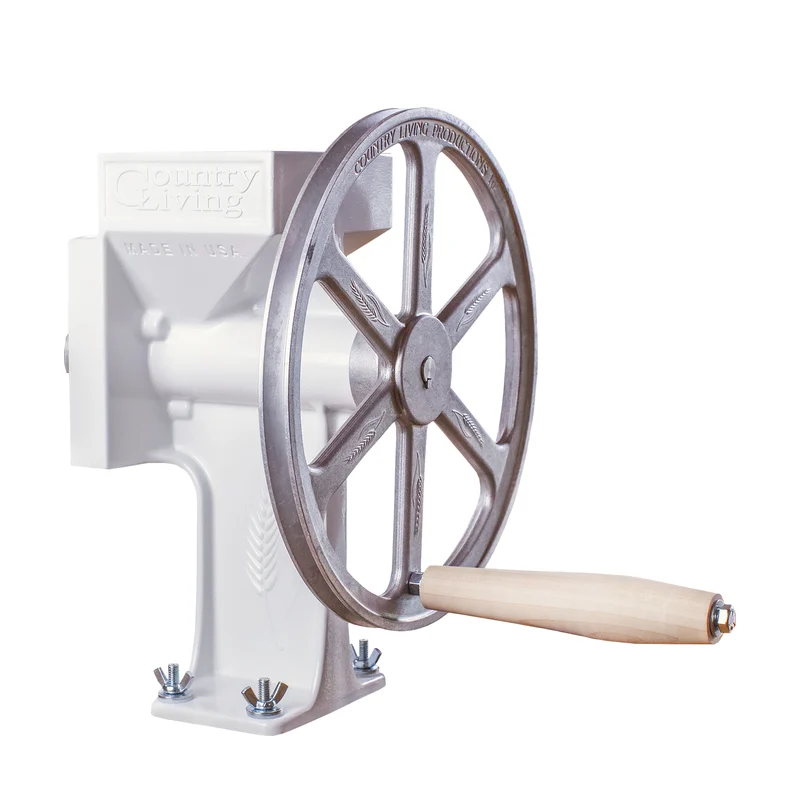
- Warranty, VEVOR MFS-140
- 12-month standard manufacturer's warranty, from VEVOR's site-wide policy rather than the product listing
- Warranty, Country Living
- Lifetime of the original owner on all parts excluding the finish; grinding plates one year
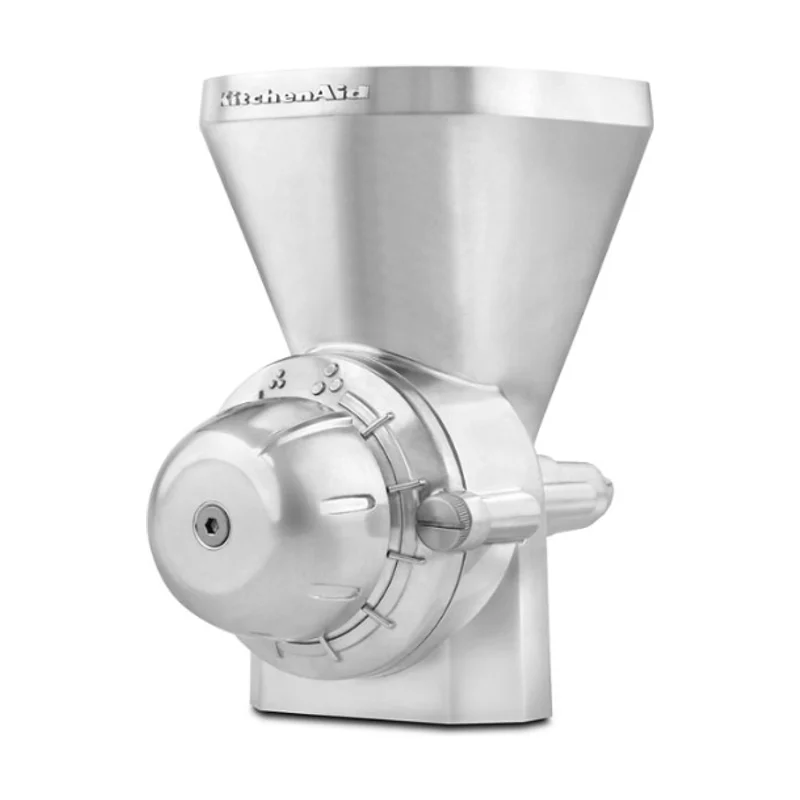
KitchenAid All Metal Grain Mill Attachment
- Warranty, VEVOR MFS-140
- 12-month standard manufacturer's warranty, from VEVOR's site-wide policy rather than the product listing
- Warranty, KitchenAid attachment
- One-year full warranty from date of purchase with hassle-free replacement, for the 50 United States and the District of Columbia; limited one-year warranty in Puerto Rico
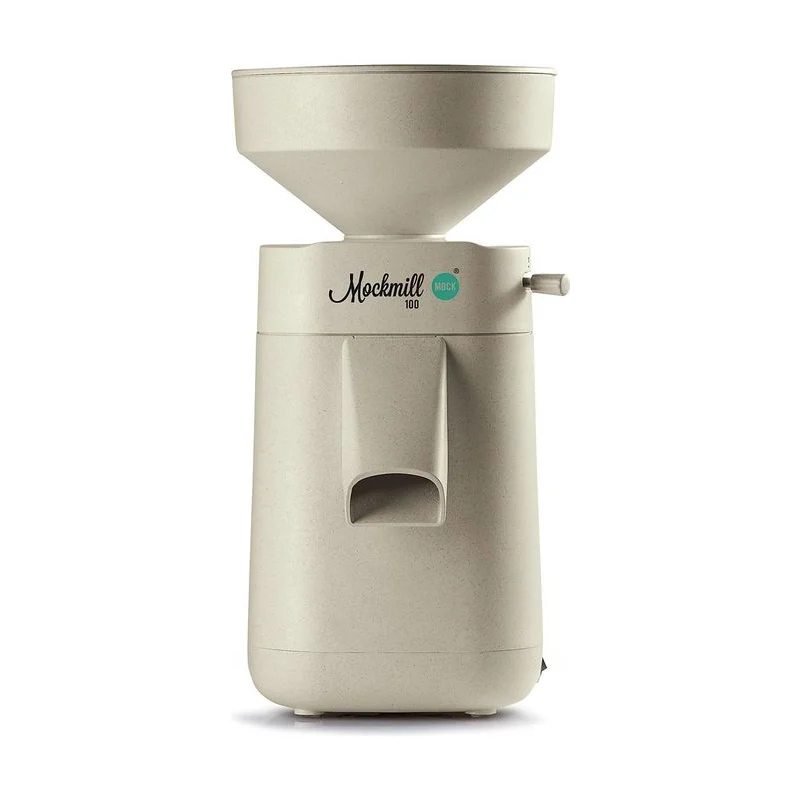
- Motor, VEVOR MFS-140
- 1500 W
- Motor, Mockmill 100
- 360 W
The documents this page was read from
- VEVOR US product listing — VEVOR Electric Grain Mill Grinder, 1500W 110V, model MFS-140 (SKU DDMPSGWY3000WPEK7V1)
- VEVOR owner manual (PDF), "GRINDER USER MANUAL MODEL: MFS-140", 12 pages — retrieved from the third-party mirror device.report, not hosted by VEVOR
- VEVOR US Return & Refund policy — site-wide 12-month warranty, 90-day quality assurance and 30-day return statements
- VEVOR product support page for SKU DDMPSGWY3000WPEK7V1 — no downloadable manual, one guide video for model GM-002
- VEVOR Manual Download Center — no grain mill and no MFS-140 manual listed
- VEVOR US sibling listing — model GM-002, 3000W (SKU DDMPSGWYMJLJOM53QV1); cited only to document variant relisting, its specifications are not attributed to MFS-140
Prices and availability are on the seller’s site. Amazon links are affiliate links; we may earn a commission at no extra cost to you. Other seller links are unpaid.
- Publication
- By Millwright
- Source
- Manufacturer documentation
- Reviewed
- Documented
- 5 of 10 attributespublished by the makerCounts published attributes, not quality.