The three rates a maker will print

Start with a recipe that names the flour
Fresh-milled describes when flour was ground. It does not identify the grain, how finely it was milled, whether anything was sifted out, or the blend in a recipe. Write those details down before comparing your loaf with someone else’s. Otherwise a change of grain or flour blend can get mistaken for an effect of freshness.
For a practical starting point, Martin Philip’s King Arthur article Mill your own flour includes a miche made with fresh-milled wheat and rye alongside commercial all-purpose flour. He explains that the commercial flour gives that loaf reliable structure. The example supports beginning with an established blend; it does not supply a replacement ratio for every bread, cake or pastry.
Use the linked original recipe for quantities, timing and method. Choose it because it matches the bread you want to make and the ingredients you can obtain. If your aim is bread made entirely with home-milled grain, choose a recipe developed for that aim rather than removing the commercial flour from a blended recipe without further guidance.
Treat water adjustments as recipe-specific
Maurizio Leo’s King Arthur spelt recipe illustrates why a single rule is unreliable. He reports that his freshly milled spelt takes more water than aged spelt, while separately explaining that spelt does not handle the same high hydration as modern wheat. Those are different comparisons. Neither establishes a percentage to add whenever flour is freshly milled.
Begin with the selected recipe’s flour and water quantities. Follow its mixing and resting instructions before deciding that the dough needs a change. If you adapt it, record the grain, flour blend, mill setting and water used; an unrecorded splash is difficult to reproduce. Treat the next bake as a comparison with that record, not as proof that all fresh flour behaves alike.
Protect flour between milling and baking
King Arthur’s storage guidance recommends an airtight bag or container and a cool, dark location. Wholegrain flour contains fat from the germ and has a shorter shelf life than white flour. For longer storage, the guidance favors the freezer; the refrigerator is an alternative when freezer space is limited, with airtight protection against moisture and odors.
Label the container with the grain and milling date so you can identify batches. This guide does not assign a fixed number of days to home-milled flour: the cited guidance does not establish a shelf life for your particular grain, packaging and kitchen. Milling only the amount in your next recipe is also a simple planning choice if you would rather avoid storing surplus flour.
Keep a useful record of the first bake
A short record makes the next decision easier. It can show that you changed the flour blend as well as the mill setting, or that a loaf you want to repeat depended on a particular recipe. This is a suggested home workflow, not a report of testing by Millwright. Follow the recipe and your mill’s operating instructions throughout.
A record you can repeat
- Choose the recipe firstSave the original recipe link and note the bread or bake it is designed to produce. Keep its quantities and method available while working.
- Identify the flourRecord the grain supplier and variety when known, the flour blend, and whether you sifted the flour. Mark unknown details as unknown.
- Record the milling choiceNote the mill model and setting. Check that its manual permits the ingredient; a setting copied from another model is not an operating instruction.
- Note deliberate changesRecord changes to water, mixing, rest or fermentation from the chosen recipe. If everything changes at once, the result is harder to interpret.
- Choose the next decisionDescribe what you want to improve or repeat. Use the recipe author’s troubleshooting guidance before assuming a different mill will solve the problem.
Choose a mill for ingredients and controls
A baking recipe tells you what flour to prepare; a mill manual tells you what the appliance permits. Keep those questions separate. Start with What you can and cannot mill if you plan to grind something besides ordinary dry grain, then confirm the instruction in the manual for the exact model.
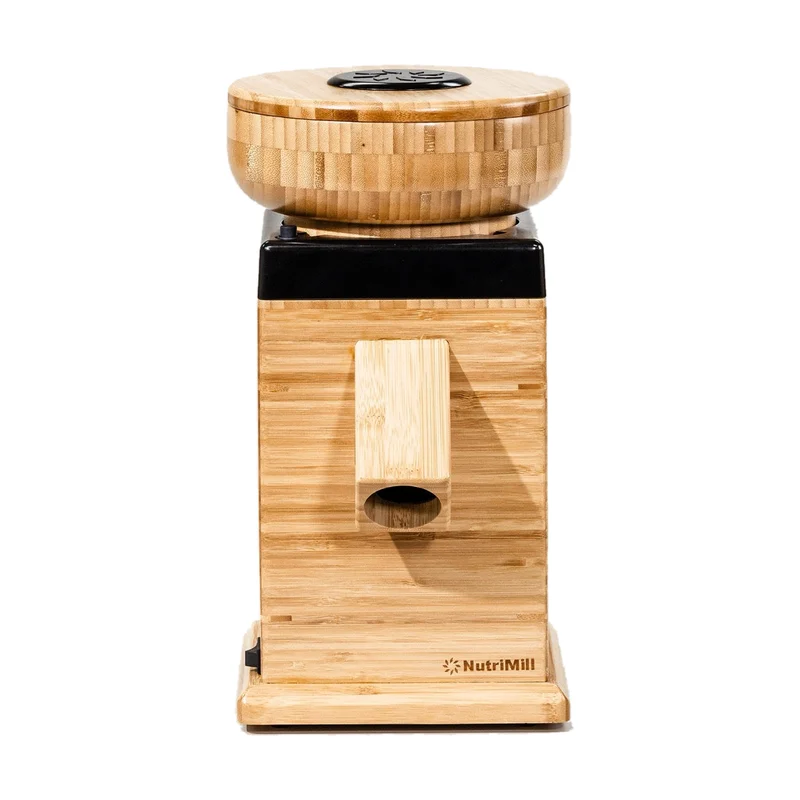
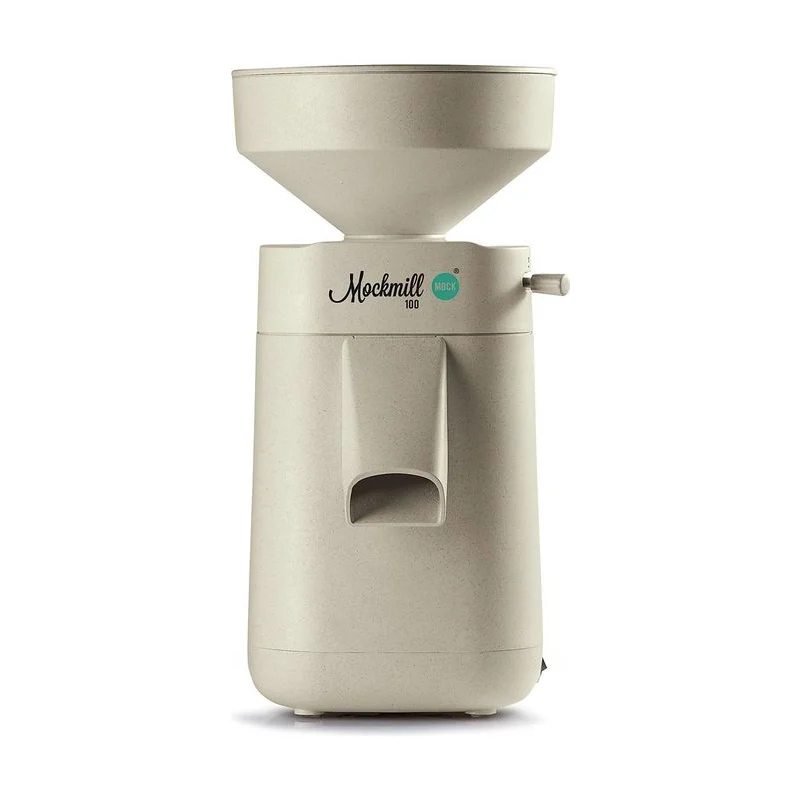
For a choice between the Harvest and Mockmill 100, NutriMill Harvest vs Mockmill 100 compares the controls and documented limits. The Mockmill 100 Stone Grain Mill page collects that model’s specifications and setup requirements. These links help with a purchase decision once the recipe and ingredient requirements are clear.
The published-rate graphic and specification table on this page describe machinery. They do not measure bread quality, nutrient retention or the amount of water your dough will need. A faster published wheat rate is useful for planning milling time; it is not a recipe recommendation.
| Question | What to check | What that does not establish | Read from |
|---|---|---|---|
| Can it mill my ingredient? | The permitted-food list in the exact model’s manual | Permission for every seed or grain | Owner manual (PDF) |
| How do I set the texture? | The manufacturer’s adjustment instructions | A universal setting for a recipe | Owner manual (PDF) |
| Will a faster mill improve my bread? | Published rate describes output over time | A measured difference in baking quality | Owner manual (PDF) |
These are document-based buying checks. Millwright has not baked a comparison loaf with these mills.
What these sources can establish
The baking advice here comes from named King Arthur authors describing their own recipes and storage guidance. The equipment information comes from the manufacturers. That gives each kind of source a clear job: recipe guidance supports a baking choice, while a manual supports an operating instruction.
These sources do not establish a health benefit from owning either mill, a nutrient-loss timetable, or equal results across grains and recipes. Millwright has not conducted a controlled baking or storage experiment. The contribution here is connecting those source boundaries to a purchase and a manageable first bake. If a source or summary needs correction, use contact and corrections.
Can I replace all-purpose flour with fresh-milled flour?
Do not assume that freshness makes the flours interchangeable. Check the grain, flour blend and intended bake. The miche example above uses both fresh-milled and commercial flour. For a different blend, choose a recipe written for it or consult that recipe author’s substitution guidance.
How much extra water should I add?
There is no universal adjustment established by the sources here. Leo’s fresh-spelt observation belongs to his flour and recipe. Start from the recipe you selected and record any deliberate adaptation rather than applying a fixed fresh-flour percentage to every bake.
Do I need to age the flour before baking?
The cited spelt method mills on the day the dough is mixed, so ageing is not required for that recipe. That is a specific example, not a claim that every recipe works identically with flour of any age. Follow the method you chose and note when your flour was milled.
Can I bake with flour stored in the freezer?
King Arthur says cold flour can generally be used directly, but calls out yeast dough: flour temperature can affect fermentation planning. Its guidance is to account for the desired dough temperature or let the flour reach room temperature before mixing. Use the temperature guidance in your chosen bread recipe.
Both mills' published specifications, side by side
| Attribute | NutriMill Harvest | Mockmill 100 |
|---|---|---|
| Milling mechanism Wording differs | Corundum stone burrs, upper and lower nutrimill.com product page | Corundum ceramic grinding stones mockmill.us product page |
| Motor Figures differ | 450 watts nutrimill.com product page | 360 W mockmill.us product page |
| Hopper capacity Figures differ | 5 cups nutrimill.com product page | 1,100 g | 2 lbs 7 oz (wheat) mockmill.us product page |
| Flour container capacity | None included; flour leaves through a continuous spout into a bowl the owner supplies nutrimill.com product page | No container supplied; stated contents are the mill with hopper cover and the owner's manual mockmill.us product page |
| Texture adjustment Wording differs | Patented texture control knob; coarse, medium or fine nutrimill.com product page | Stepless, variable from very fine to coarse mockmill.us product page |
| Dimensions Figures differ | h13" x w6" x d9" as printed in the product-page specification list; two other figures are published, see the documentation conflicts section nutrimill.com product page | 380 x 220 x 190 mm | 15 x 8.7 x 7.5 in mockmill.us product page |
| Weight Figures differ | 16 lbs nutrimill.com product page | 6 kg | 13 lbs 3.5 oz mockmill.us product page |
| Housing Figures differ | Bamboo nutrimill.com product page | Terluran GP-35 mockmill.us product page |
| Thermal protection | Auto-shutoff thermal protection nutrimill.com product page | —No row for this attribute appears in the documents read for this mill. |
| Safety certification | Tested and listed by CSA; stated to meet all US safety standards nutrimill.com product page | —No row for this attribute appears in the documents read for this mill. |
| Warranty Figures differ | 5 years against manufacturing defects in materials and workmanship nutrimill.com product page | 6 years, non-commercial use mockmill.us product page |
| Country of manufacture Wording differs | Designed and assembled in the USA nutrimill.com product page | Germany mockmill.us product page |
| Voltage | —No row for this attribute appears in the documents read for this mill. | 110 V (US listing) mockmill.us product page |
| Milling speed | —No row for this attribute appears in the documents read for this mill. | Approx. 1,100 RPM (owner manual states approx. 1,300 rpm at 110 V, 60 Hz) — the manufacturer’s own documents disagree on this figure. mockmill.us product page |
| Milling rate | —No row for this attribute appears in the documents read for this mill. | Approx. 100 g/min | approx. 3.5 oz/min (soft wheat) mockmill.us product page |

The documents this page was read from
- Martin Philip — Mill your own flour (King Arthur Baking; recipe and flour-blend example)
- Maurizio Leo — Fresh-Milled Spelt Sourdough (King Arthur Baking; recipe-specific handling)
- Annabelle Nicholson — How to store flour (King Arthur Baking; storage guidance)
- Mockmill 100 / 200 operating instructions (current manufacturer manual)
- NutriMill Harvest user guide (manufacturer manual)
Decide between two of these mills
This guide works from published documents rather than choosing for you. Each comparison below settles one named pair on the rows both makers print.
- Impact vs stone burr grain millsThe NutriMill Classic's impact chamber and the Mockmill 100's ceramic stones, compared on what each mechanism permits, adjusts, excludes and requires.
- NutriMill Classic vs NutriMill HarvestNutriMill Classic vs Harvest: the Classic's 12- or 13-cup hopper and 20-cup bowl (21 to 22 in its manual) against the Harvest's 5-cup hopper and spout.
- NutriMill Harvest vs Mockmill 100Two corundum stone mills compared on stone material, texture adjustment, hopper capacity, housing and how much each manufacturer documents.
- Mockmill 100 vs KoMo Fidibus ClassicBoth mill on corundum ceramic stones at 360 watts. The split is the case: Terluran GP-35 against oiled beech, six years of warranty against twelve.
- Mockmill 100 vs Mockmill 200Mockmill 100 vs 200: Mockmill rates the 200 at 600 W and about 200 g of wheat a minute, the 100 at 360 W and 100 g. Hopper and warranty match.
Where to buy the mills this guide works from, and the documents behind these figures
Prices and availability are on the seller’s site. Amazon links are affiliate links; we may earn a commission at no extra cost to you. Other seller links are unpaid.
- Publication
- By Millwright
- Source
- Baking guidance and manufacturer documentation
- Updated